 info@stockbinge.com.au
 03 8609 4895

Blog Details
- Home
- Blog Details
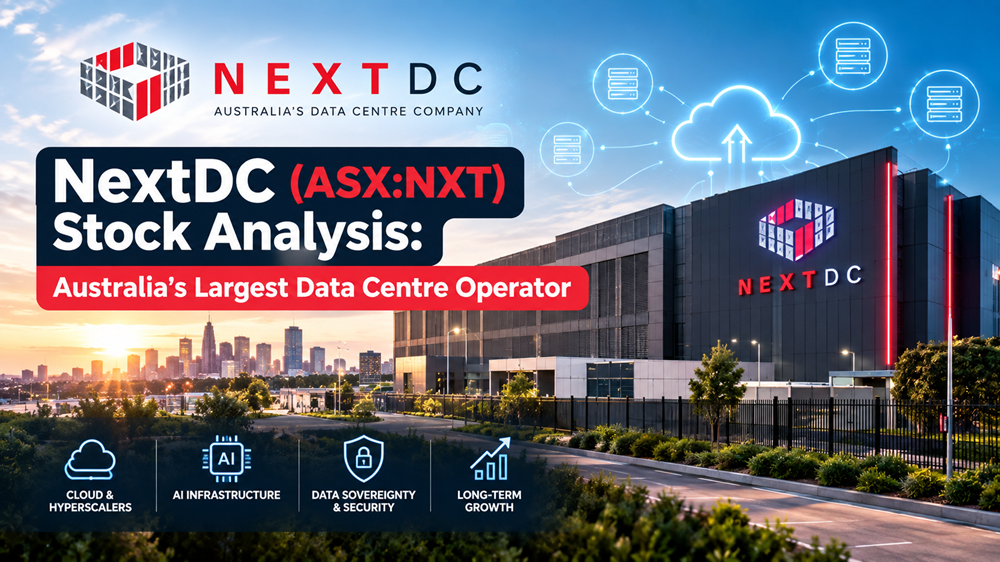
NEXTDC (ASX:NXT) Stock Analysis 2026: Australia’s Largest Data Centre Operator
NEXTDC Limited (ASX: NXT) is Australia’s largest independent data-centre operator and a listed play on cloud computing, artificial intelligence (AI) and digital infrastructure. Its carrier-neutral colocation model provides power, cooling, security, connectivity and operational support for customer equipment.
Hyperscale cloud and AI demand has driven future-capacity contracts. However, NEXTDC is entering a capital-intensive phase. FY26 earnings grew strongly, but capital expenditure doubled and the company raised debt, hybrid capital and equity.
The key question for investors is whether NEXTDC can convert its contracted capacity into revenue and cash flow quickly enough to justify the funding and execution risks involved in its expansion programme.
NEXTDC Business Model and Market Position
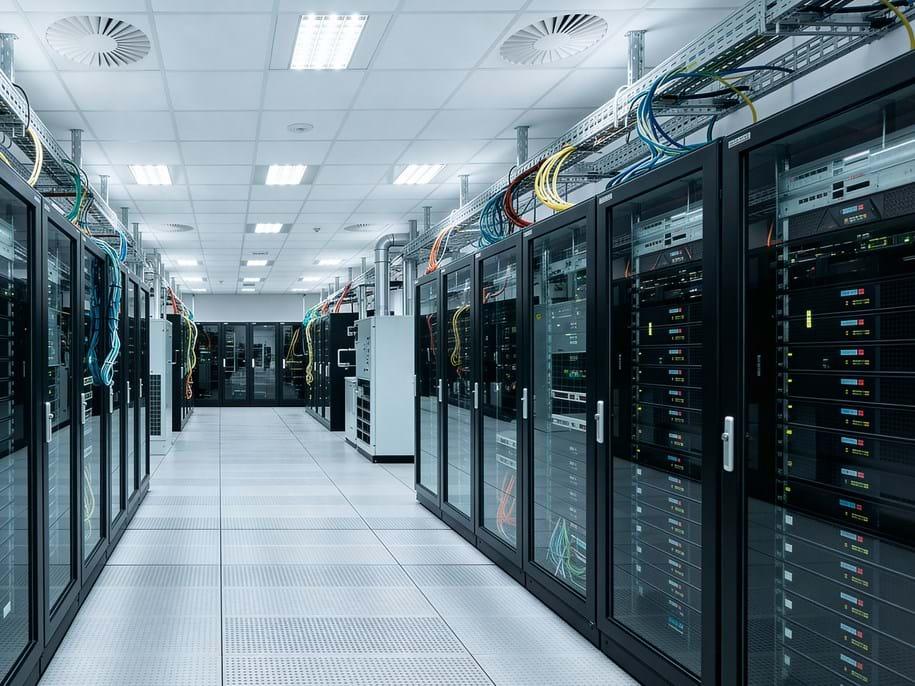
NEXTDC operates Tier III and Tier IV facilities across Sydney, Melbourne, Brisbane, Perth, Adelaide, Canberra and Darwin, and is expanding into Kuala Lumpur, Tokyo and Auckland.
Its ecosystem includes more than 750 cloud, network and IT-service providers.
NEXTDC's revenue is influenced by:
- Data-centre capacity billed to customers
- Contracted power capacity
- Customer consumption
- Associated data-centre services
Built Capacity vs Billing Utilisation vs Contracted Utilisation
A useful distinction when analysing NEXTDC is between built capacity, billing utilisation and contracted utilisation.
- Built capacity: Infrastructure that is ready for deployment.
- Billing utilisation: Capacity currently generating billing.
- Contracted utilisation: Signed customer commitments that may produce future billing as facilities are delivered and customers deploy equipment.
This distinction is important because contracted megawatts do not automatically translate into immediate revenue.
NEXTDC FY26 Results: Strong Earnings and Record Contracting
For the year ended 30 June 2026, NEXTDC reported:
| FY26 Metric | Result |
|---|---|
| Total revenue | A$496.5 million |
| Net revenue | A$405.0 million |
| Underlying EBITDA | A$248.8 million |
| Statutory profit after tax | A$82.1 million |
| Built capacity | 287.9MW |
| Billing utilisation | 175.0MW |
| Pro forma contracted utilisation | 740.1MW |
| Forward order book | 565.1MW |
Total revenue increased 16% from A$427.2 million, while net revenue rose 16% to A$405.0 million.
Underlying EBITDA increased 15% to A$248.8 million, above the company's FY26 guidance range of A$230 million to A$240 million.
Statutory Profit Requires Context
Statutory profit after tax was A$82.1 million, compared with a A$60.5 million loss in FY25.
The result included a A$128.8 million fair-value gain after certain sites moved to investment-property accounting under AASB 140.
Therefore, statutory profit should be distinguished from recurring operating earnings when analysing NEXTDC's underlying performance.
NEXTDC Forward Order Book
Operational growth was particularly significant.
Built capacity increased 38% to 287.9MW, while billing utilisation increased 58% to 175.0MW.
Pro forma contracted utilisation reached 740.1MW, compared with 244.8MW at the end of FY25.
The resulting 565.1MW forward order book was more than three times billing utilisation.
Management estimates that existing contracted utilisation could generate more than A$1.0 billion of contracted EBITDA.
This is a forward-looking estimate rather than reported EBITDA. It excludes new customer wins, contract extensions and terminations and depends on construction, customer deployment and timing assumptions.
NEXTDC AI and Data-Centre Expansion Pipeline
NEXTDC's development pipeline is increasingly focused on:
- Hyperscale cloud
- Sovereign cloud
- Neocloud
- High-performance computing
- Artificial intelligence infrastructure
Its portfolio includes major developments such as S4 Sydney, M3 Melbourne and M5 Melbourne, alongside AI-ready facilities including S6 Sydney.
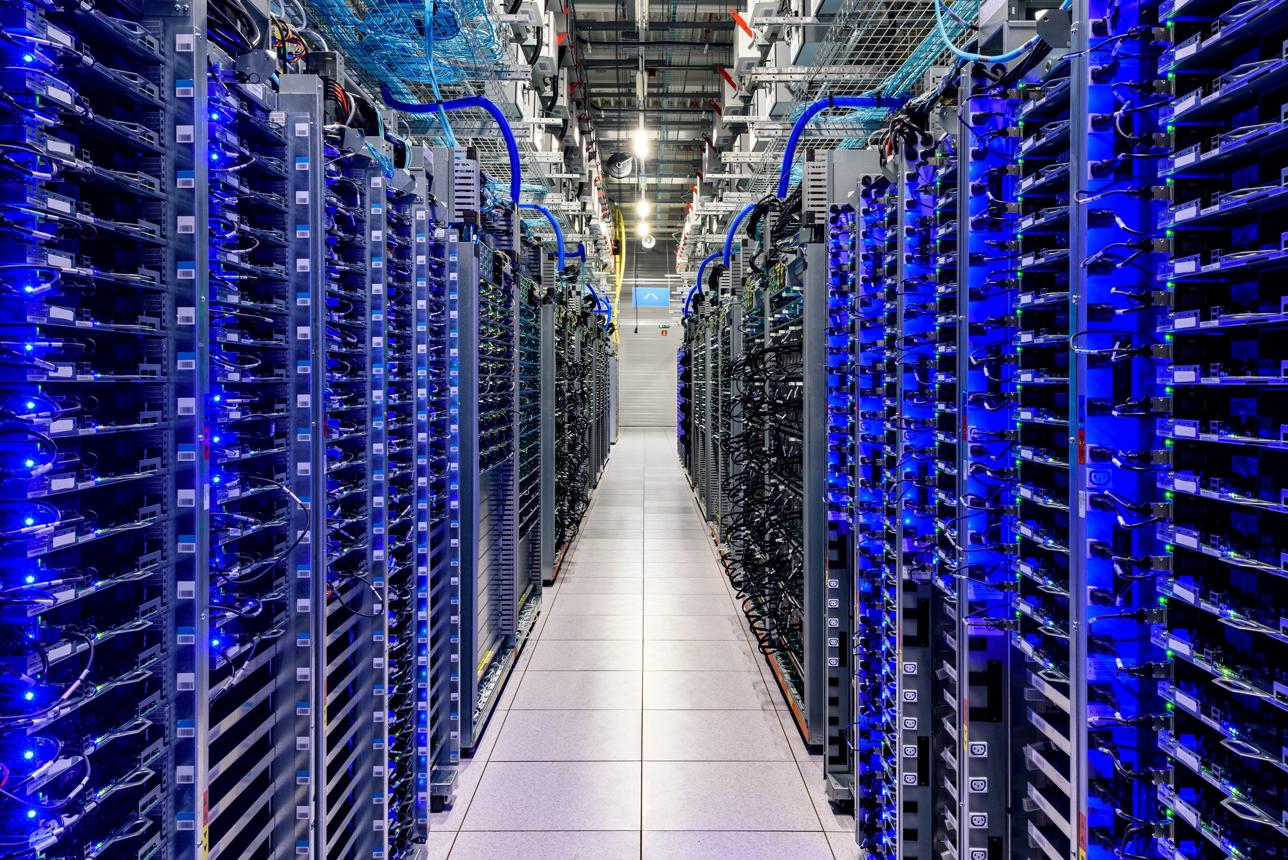
The company also reports liquid-to-chip cooling capability for high-density computing.
FY26 Capacity Expansion
During FY26, NEXTDC added:
- 42MW at M3 Melbourne
- 12MW at M2 Melbourne
- 16MW at S3 Sydney
It also opened KL1 in Kuala Lumpur with a foundation customer.
Construction and planning continued across S4 Sydney, M2 and M3 Melbourne, S6 Sydney, Tokyo and other regional network locations.
Why AI Data Centres Need More Power and Cooling
AI workloads generally require more power and cooling per rack than traditional enterprise computing.
Direct liquid cooling and high-density electrical infrastructure can therefore increase the value of facilities with secure power access.
NEXTDC reported FY25 portfolio PUE of 1.44 and liquid-to-chip cooling supporting 50MW of IT load, scalable beyond 100MW.
However, grid connections, planning approvals, renewable procurement, firming and water use can affect development timing and costs.
NEXTDC FY27 Guidance and the Growth Conversion Test
NEXTDC expects 197MW of forward order book capacity to convert into billing during FY27.
The company has guided to:
| FY27 Guidance | Forecast |
|---|---|
| Net revenue | A$615m–A$640m |
| Net revenue growth | 52%–58% |
| Underlying EBITDA | A$385m–A$410m |
| EBITDA growth | 55%–65% |
| Capital expenditure | A$5.25bn–A$5.75bn |
The guidance demonstrates significant operating leverage, but converting contracted capacity into revenue requires major investment.
FY27 capital expenditure guidance of A$5.25 billion to A$5.75 billion is substantially above FY26 capital expenditure of A$3.397 billion.
What Investors Should Monitor
The most important indicators include:
- Customer deployment dates
- Billing utilisation
- Construction milestones
- Operating cash flow
- Conversion of contracted megawatts into billable capacity
Contracted megawatts provide visibility, but the ultimate financial outcome depends on billing timing and the capital required to deliver the capacity.
NEXTDC Balance Sheet, Funding and Valuation Considerations
At 30 June 2026, NEXTDC held A$876 million in cash.
Senior debt facilities were A$6.4 billion at balance date, with additional senior facilities announced after year-end.
Pro forma liquidity was reported at A$8.7 billion, including cash, undrawn senior debt and undrawn hybrid securities.
NEXTDC Capital Raising
NEXTDC raised A$9.75 billion of new capital from August 2025 through FY26.
This included:
- Senior debt
- Subordinated notes
- Hybrid securities
- A A$1.5 billion equity offer
The funding supports expansion but also increases financing complexity and interest obligations.
No FY26 dividend was declared.
NEXTDC Valuation Considerations
During this investment phase, metrics such as:
- Enterprise value relative to EBITDA
- Contracted capacity
- Stabilised returns
- Required funding
- Return on invested capital
may provide more useful context than price-to-earnings alone.
Any valuation analysis should use a dated share price and fully diluted share count.
Importantly, forward contracted EBITDA is not the same as current EBITDA.
Key Risks in NEXTDC Stock
Capital Intensity and Leverage
NEXTDC's expansion requires billions of dollars of construction and financing.
Delays, cost inflation, higher interest rates or weaker customer deployments could reduce returns on invested capital.
Power and Regulatory Risk
Energy access is a strategic constraint for data-centre operators.
NEXTDC identifies energy-market volatility, climate, cyber and stakeholder trust as material risk themes.
Proposed Australian and New South Wales reforms may introduce requirements around network charges, renewable procurement, firming and connection approvals.
Customer Concentration and Contract Execution
Large hyperscale contracts can support future growth, but NEXTDC must deliver facilities on schedule and customers must install equipment as expected.
A signed commitment is not equivalent to immediate billing.
Technology and Competition
AI infrastructure is evolving rapidly.
Cooling systems, power density, networking standards and customer preferences may change over time.
NEXTDC also competes with:
- Other colocation providers
- Cloud platforms
- Telecommunications companies
- Private infrastructure investors
Sustainability and Operating Resilience
Data centres consume significant amounts of electricity and require cooling, backup generation and water management.
NEXTDC reported FY25 total energy use of 525,291MWh and portfolio PUE of 1.44.
Energy efficiency can help reduce operating costs, but extreme weather, grid interruptions, cyber incidents and equipment failures remain material risks.
NEXTDC Stock Outlook: What Investors Should Watch
NEXTDC offers listed exposure to Australia's digital-infrastructure build-out, which can be considered as part of a broader ASX 200-focused portfolio.
Its key growth drivers include:
- National data-centre coverage
- Cloud and hyperscale demand
- AI infrastructure
- Sovereign computing
- Its partner ecosystem
- A large contracted pipeline
FY27 guidance suggests faster growth as additional capacity becomes billable.
For investors researching different ASX investment themes, data-centre infrastructure can also be compared with other sectors such as ASX gold stocks.
The Growth vs Funding Question
The key counterpoint is valuation and execution.
NEXTDC is funding substantial expansion with significant new capital, while current cash generation remains modest relative to the construction programme.
The stock therefore warrants analysis based on long-term capacity conversion, cash-flow generation and return on capital, rather than short-term earnings alone.
NEXTDC ASX:NXT Stock Analysis FAQ
What Does NEXTDC Do?
NEXTDC operates carrier-neutral data centres.
It provides secure facilities, power, cooling, connectivity and operational support for cloud, enterprise, government and technology customers.
Is NEXTDC Australia's Largest Data-Centre Operator?
NEXTDC describes itself as Australia's leading independent data-centre operator and lists a nationwide network of Tier III and Tier IV facilities.
Its FY26 presentation reported 287.9MW of built capacity and 175.0MW of billing utilisation.
What Was NEXTDC's FY26 Revenue?
NEXTDC reported A$496.5 million of total revenue and A$405.0 million of net revenue in FY26.
Underlying EBITDA was A$248.8 million.
What Is NEXTDC's Forward Order Book?
NEXTDC's FY26 pro forma forward order book was 565.1MW.
It represents binding contracted commitments above billing utilisation, but it is not current revenue and remains subject to delivery and customer-deployment conditions.
Is NEXTDC Stock a Buy?
This article is not a buy or sell recommendation.
Investors should assess current valuation, funding requirements, potential dilution, execution, customer concentration and individual risk tolerance before making an investment decision.
Conclusion
NEXTDC is a high-growth digital-infrastructure company transitioning from a portfolio-building phase into a large-scale capacity-conversion phase.
FY26 delivered strong revenue and EBITDA growth, while contracted utilisation expanded substantially. The opportunity is supported by AI, cloud and sovereign-computing demand.
The central test is whether NEXTDC can convert its 565.1MW forward order book into billing, revenue and cash flow while managing its A$5.25 billion to A$5.75 billion FY27 capital programme.
Growth potential is substantial, but so are the funding and execution risks.
References
[1] NEXTDC About Us and Business Overview
[2] NEXTDC FY26 Record Results and Record FY27 Growth Guidance
[3] NEXTDC FY26 Annual Report and Appendix 4E
[4] NEXTDC Data Centres for AI, Cloud and Critical Workloads
Talk to Our Experts
ABN 54 672 177 347 | ACN 672 177 347
Copyright © 2026 StockBinge. All Right Reserved. Design by StockBinge.