 info@stockbinge.com.au
 03 8609 4895

Blog Details
- Home
- Blog Details
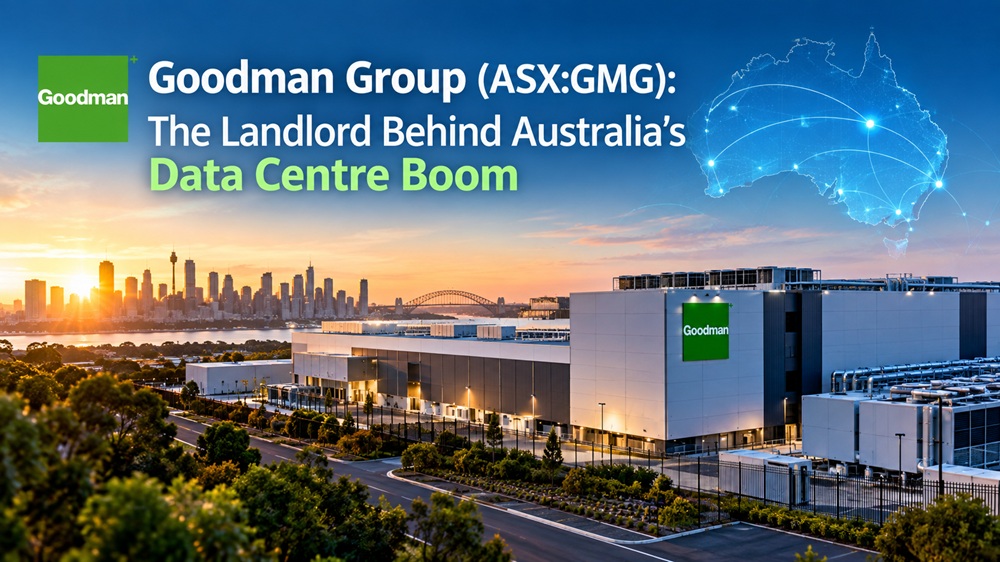
Goodman Group (ASX:GMG): The Landlord Behind Australia's Data Centre Boom
Artificial intelligence (AI), cloud computing and digital services are driving a major expansion in data-centre infrastructure around the world. In Australia, companies such as NEXTDC and Macquarie Technology Group are building and operating facilities to meet this demand, but there is another ASX-listed company playing an important role behind the scenes: Goodman Group (ASX:GMG).
Best known as a global owner, developer and manager of industrial and logistics property, Goodman is increasingly positioning itself as a major developer of data-centre infrastructure.
The strategy is built around several scarce resources: land, power, planning approvals, connectivity and capital.
As of 30 June 2026, Goodman reported a 6.4 GW global data-centre power bank across 16 major cities, including Sydney. This makes Goodman an increasingly important property and infrastructure name for investors researching the intersection between AI, data centres and Australian real estate.
This article looks at how Goodman Group is approaching the data-centre boom, why power and land matter, its Australian projects, financial model, growth drivers and the key risks investors should consider.
What Is Goodman Group (ASX:GMG)?
Goodman Group is an integrated property group operating across property investment, development and investment management.
The company's traditional business has focused heavily on industrial and logistics property. Goodman owns, develops and manages warehouses, distribution facilities and other large-scale properties in major metropolitan markets.
However, the same fundamentals that make industrial property attractive can also be valuable for data centres.
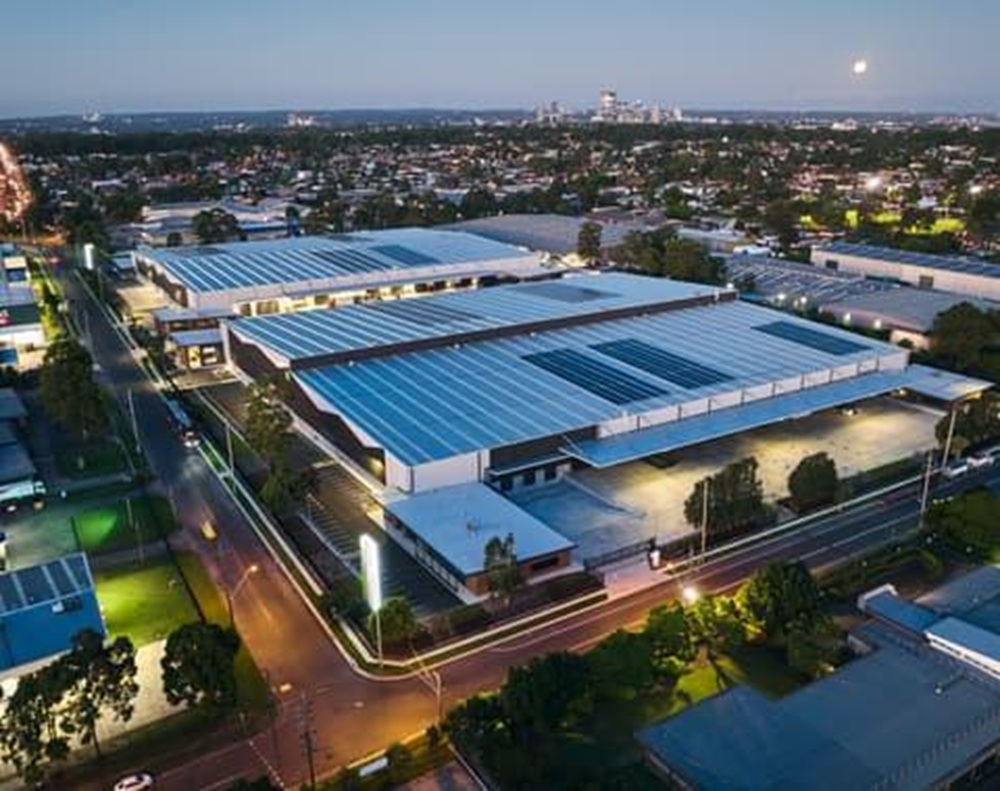
Data-centre developments require:
- Large and strategically located sites
- Reliable electricity supply
- Planning approvals
- High-quality telecommunications connectivity
- Access to infrastructure
- Significant construction expertise
- Large amounts of capital
Goodman's existing property platform gives it experience in acquiring land, navigating planning processes, developing large infrastructure projects and working with institutional capital partners.
That creates a pathway for Goodman to participate in the data-centre industry without becoming a traditional technology company.
Why Goodman Is Expanding Into Data Centres
The rapid growth of cloud computing and AI has changed the requirements of digital infrastructure.
AI workloads can require significantly more computing capacity and electricity than many traditional computing applications. As hyperscalers, cloud providers and other technology companies expand their infrastructure, demand for suitable data-centre sites is increasing.
Goodman has identified power, land, planning and capital as critical constraints in the data-centre market. Its strategy is to secure these fundamentals early and develop infrastructure in supply-constrained metropolitan locations.
This is where the company's property expertise becomes particularly relevant.
A conventional industrial site may have considerable value as a warehouse or logistics development. A site with secured electricity, suitable planning and strong connectivity can potentially have a different strategic value when it is suitable for a large-scale data centre.
Goodman Is More Than a Traditional Landlord
Although Goodman is sometimes described as a landlord, its data-centre strategy extends beyond simply owning completed buildings.
The company can participate in several stages of the development process:
- Acquiring suitable land
- Securing power capacity
- Obtaining planning approvals
- Developing supporting infrastructure
- Constructing data-centre facilities
- Working with potential customers
- Partnering with institutional investors
- Retaining or recycling completed assets
This integrated approach means Goodman can potentially generate value through development and investment management as well as long-term property ownership.
Goodman's Data Centre Pipeline in 2026
Goodman's data-centre exposure has expanded rapidly.
As of 30 June 2026, the company's global data-centre power bank had reached 6.4 GW, consisting of 3.6 GW of secured power and 2.8 GW in advanced procurement across 16 major cities.
The pipeline includes markets such as:
- Sydney
- Amsterdam
- Frankfurt
- Paris
- Madrid
- Los Angeles
- Tokyo
- Hong Kong
The international footprint is important because Goodman is not relying exclusively on Australia's data-centre market.
At the same time, Australia remains a major part of the strategy.
Goodman SYD01: A Major Australian Data Centre Project
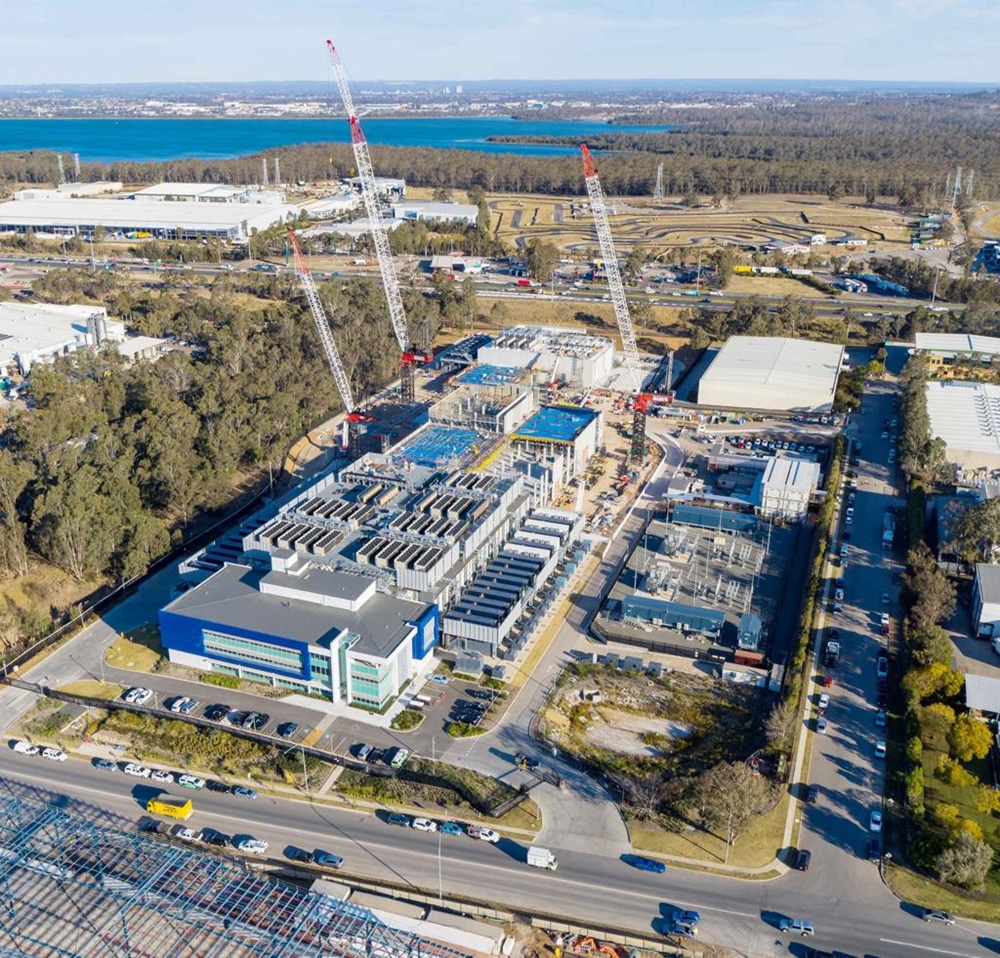
One of Goodman's most significant Australian projects is SYD01 in Artarmon, northern Sydney.
Construction officially commenced in March 2026. The project has 90 MW of secured utility power and is designed to provide 61 MW of IT capacity across five 12.2 MW phases.
The first phase is expected to be ready for service in Q2 2028.
The project is located approximately 10 kilometres from Sydney's CBD and is designed to benefit from access to power and network connectivity.
SYD01 is part of Goodman's broader Australian power bank. When construction commenced, Goodman said it had seven stabilised Australian data centres supporting hyperscale and enterprise customers.
The project demonstrates an important part of Goodman's strategy: secure the site and power first, then develop the infrastructure required for future digital workloads.
How AI Is Changing the Value of Industrial Property
The growth of AI is creating a closer connection between technology and real estate.
Traditional industrial property is generally assessed according to factors such as location, tenant demand, transport access and building specifications.
Data centres introduce another critical factor: electricity availability.
A site with substantial secured power can be strategically important because obtaining a new grid connection can be complex and time-consuming.
Goodman's data-centre pipeline is therefore concentrated in supply-constrained metropolitan markets where access to power, planning, capital and network connectivity is particularly important.
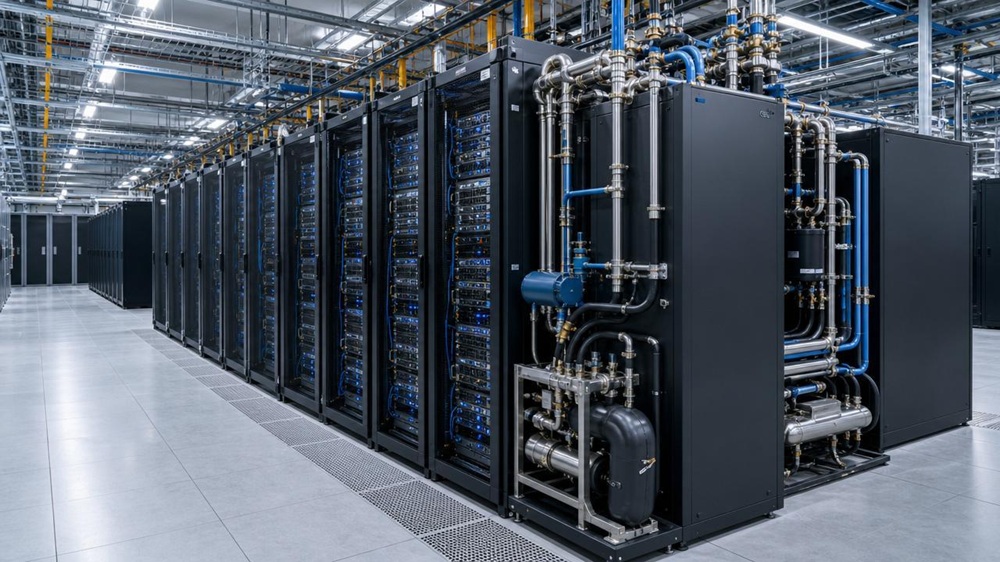
This creates a potential competitive advantage for property developers that can secure these resources ahead of competitors.
Goodman's Financial Model
Goodman's business model has several major components.
Property Investment
Goodman owns interests in industrial and other property assets that generate rental income.
At 31 December 2025, Goodman reported a total portfolio of $87.4 billion, including assets held directly and through partnerships.
Property Development
Development is another important part of Goodman's business.
The company develops properties for its own portfolio, customers and capital partners.
This is becoming particularly relevant to its data-centre strategy. In the first half of FY2026, Goodman reported $14.4 billion of work in progress across 51 projects, with data centres accounting for 73% of development WIP by value.
This figure highlights how significant data centres have become within Goodman's development pipeline.
Investment Management
Goodman also works with institutional capital partners to finance property development and ownership.
This is particularly useful for data centres because large-scale projects can require billions of dollars of investment.
By partnering with institutional investors, Goodman can access additional capital while retaining exposure to development and investment-management activities.
In February 2026, Goodman said it had established a $14 billion European data-centre development partnership and was working toward an Australian data-centre partnership.
Goodman Group vs Pure-Play Data Centre Operators
Goodman should not be viewed as identical to a pure-play data-centre operator such as NEXTDC.
Goodman's business combines property investment, development and investment management, with data centres becoming an increasingly important part of its development activity.
By comparison, NEXTDC is directly focused on operating data-centre infrastructure.
For a broader look at Australia's listed data-centre sector, see our ASX data centre stocks comparison covering NEXTDC, Macquarie Technology Group and DigiCo Infrastructure REIT.
NEXTDC's business model is more directly linked to data-centre capacity and customer deployments, while Goodman provides exposure through property development, ownership and capital partnerships.
For investors, the distinction matters because the financial drivers and risks are not identical.
Goodman Group and Australia's Data Centre Boom
Australia's data-centre industry is becoming increasingly important as businesses adopt cloud computing, AI and other digital services.
Sydney is particularly significant because it is a major technology, connectivity and business market.
Goodman's strategy is therefore not simply about constructing buildings. It is about controlling or accessing the infrastructure required to make those buildings viable.
This includes:
- Land
- Electricity
- Grid connections
- Telecommunications
- Planning approvals
- Construction capability
- Institutional capital
Goodman's February 2026 results highlighted the importance of these factors, with the company stating that power, sites and capital are critical to servicing data-centre demand and providing delivery certainty.
For readers researching the wider theme, StockBinge's NEXTDC (ASX:NXT) Stock Analysis 2026 provides a separate look at Australia's major independent data-centre operator.
Key Risks for Goodman Group Investors
The data-centre opportunity does not remove the risks associated with property development.
High Capital Requirements
Data-centre projects can require substantial capital before they begin generating income.
Construction delays, cost inflation or changes in customer requirements could affect project economics and returns.
Power Availability
Power is both an opportunity and a constraint.
Goodman's strategy depends on securing sufficient electricity capacity for future projects. Delays in grid connections or changes in energy infrastructure could affect development schedules.
Interest Rates and Property Valuations
Goodman remains a major property company.
Changes in interest rates can influence property valuations, financing costs and the attractiveness of listed property securities.
Investors therefore need to consider the broader property cycle alongside the company's data-centre opportunity.
Development and Customer Risk
Data-centre developments can take several years to complete.
Even when underlying demand is strong, planning, construction, power connections and customer deployment can affect the timing of revenue and cash flows.
AI Demand and Technology Risk
AI is a major driver of data-centre investment, but investors should distinguish between long-term industry demand and the assumptions behind individual projects.
Technology requirements can evolve rapidly, while power costs, cooling requirements, customer contracts and construction economics can change.
What Investors Should Watch in Goodman Group
Investors researching Goodman Group (ASX:GMG) can monitor several indicators.
Data Centre Power Capacity
The company's secured and prospective power capacity provides an indication of the scale of its potential future development platform.
Goodman's global power bank reached 6.4 GW at 30 June 2026.
Development Work in Progress
WIP can provide insight into the scale of future development activity.
However, WIP should not automatically be treated as near-term revenue because projects still need to progress through construction and customer deployment.
Customer Commitments
Customer commitments can provide greater visibility around future developments.
Investors should distinguish between secured customer commitments, projects under construction and earlier-stage pipeline opportunities.
Capital Partnerships
New institutional partnerships can provide additional capital for development while allowing Goodman to retain exposure to development and investment-management economics.
Balance Sheet
Because property development is capital-intensive, investors should monitor gearing, liquidity, funding requirements and interest costs alongside pipeline growth.
Goodman's Role in the Digital Infrastructure Economy
Goodman's data-centre strategy represents an evolution of its traditional property business.
Rather than viewing data centres solely as technology infrastructure, Goodman approaches them partly as a real-estate and development opportunity.
The model can be summarised as:
Land + Power + Planning + Development Expertise + Capital
That combination is increasingly relevant in markets where suitable data-centre sites are difficult to secure.
Goodman's global pipeline demonstrates the scale of the strategy. At 30 June 2026, its data-centre power bank stood at 6.4 GW across 16 major cities, including Sydney.
Goodman Group (ASX:GMG) FAQs
Is Goodman Group a data-centre company?
Goodman Group is not a pure-play data-centre operator. It is an integrated property group involved in property investment, development and investment management. Data centres have become an increasingly important part of its development strategy.
How much data-centre power does Goodman have?
As of 30 June 2026, Goodman reported a 6.4 GW global data-centre power bank, comprising 3.6 GW of secured power and 2.8 GW in advanced procurement across 16 major cities.
What is Goodman SYD01?
SYD01 is Goodman's data-centre development in Artarmon, northern Sydney. It has 90 MW of secured utility power and is designed to deliver 61 MW of IT capacity across five phases. The first 12.2 MW phase is expected to be ready for service in Q2 2028.
Is Goodman Group the same as NEXTDC?
No. Goodman is an integrated property group with significant data-centre development exposure, while NEXTDC is a specialist data-centre operator. Their business models therefore provide different forms of exposure to the growth of digital infrastructure.
Why is land important for data centres?
Data centres require large sites with suitable planning, electricity, telecommunications connectivity and supporting infrastructure. In major metropolitan markets, securing land and power can therefore be a significant constraint.
What are the main risks for Goodman Group?
Key risks include property-market conditions, interest rates, construction costs, project delays, power availability, customer commitments and the substantial capital requirements associated with data-centre development.
Conclusion
Goodman Group is becoming an increasingly important part of Australia's data-centre infrastructure story.
The company's traditional strength in industrial property has provided a platform for a broader opportunity: securing sites, obtaining power, developing large-scale infrastructure and working with institutional capital partners to deliver data-centre capacity.
Its 6.4 GW global data-centre power bank as of June 2026, together with projects such as Sydney's SYD01, demonstrates how significant data centres have become within Goodman's development strategy.
For investors researching the theme, Goodman offers a different form of exposure from pure-play data-centre operators. Its performance is linked not only to data-centre demand, but also to property development, capital management, power availability, construction execution and the broader real-estate market.
As with any listed property company, investors should assess valuation, balance-sheet strength, development risks and broader market conditions rather than looking at data-centre exposure in isolation.
Disclaimer: This article is for general information and educational purposes only and does not constitute personal financial advice. Investors should conduct their own research or seek professional financial advice before making investment decisions.
References
- Goodman Group — Global Data Centre Pipeline
Supports the 6.4 GW global power bank, 3.6 GW secured power, 2.8 GW advanced procurement, 16 major cities, and Goodman’s explanation of the importance of power, land, capital and planning.
Goodman Global Data Centre Pipeline - Goodman Group — SYD01 Data Centre Construction Announcement
Supports the 90 MW secured power, 61 MW IT capacity, five 12.2 MW phases, Artarmon location and Q2 2028 first-phase target.
Goodman SYD01 Official Announcement - Goodman Group — 1H FY2026 Results
Supports the $1.2 billion operating profit, $87.4 billion portfolio, $14.4 billion WIP, 73% data-centre share of development WIP, 6.0 GW power bank and $14 billion European data-centre partnership.
Goodman 1H FY2026 Results - Goodman Group — 1H FY2026 Results Presentation (PDF)
Useful as a supporting investor presentation for the $14.4 billion WIP, 73% data-centre proportion, 8.1% development yield on cost and development metrics.
Goodman 1H FY2026 Results Presentation
Talk to Our Experts
ABN 54 672 177 347 | ACN 672 177 347
Copyright © 2026 StockBinge. All Right Reserved. Design by StockBinge.