 info@stockbinge.com.au
 03 8609 4895

Blog Details
- Home
- Blog Details
US Tariff Fears and Their Impact on the ASX and Australian Dollar: A Comprehensive 2025 Analysis
US tariff fears became one of the most important macroeconomic themes for Australian investors in 2025. The sharp escalation in global trade-policy uncertainty affected equity markets, commodity prices, currencies, bond markets and expectations for economic growth.
For Australia, the impact was complicated by the country's relatively limited direct trade exposure to the United States, its close economic links with China and its sensitivity to commodity prices and global risk sentiment.
The US tariff fears and their impact on the ASX and Australian dollar became particularly visible in April 2025. Following the US tariff announcements on 2 April, Australian equities fell sharply and the Australian dollar weakened. Markets subsequently recovered as some tariff measures were paused or reduced and investors reassessed the potential economic impact.
The Reserve Bank of Australia (RBA) noted that Australian equity prices declined sharply in early April following the tariff announcements but subsequently recovered.
What Happened With US Tariffs in 2025?
On 2 April 2025 US Eastern Time, the US administration announced a broad tariff package that included a 10% baseline tariff on imports and additional country-specific measures.
The Australian Government stated on 3 April that most Australian-originating goods would be subject to a 10% US tariff from 5 April. The announcement followed earlier US measures, including 25% tariffs on certain aluminium and steel imports and a 25% tariff on imported automobiles.
The announcements were larger than many financial-market participants had anticipated.
The immediate consequence was a sharp increase in uncertainty about:
- Global economic growth
- International trade volumes
- Corporate earnings
- Commodity demand
- Inflation
- Interest rates
- Currency movements
- Business investment
The RBA subsequently described the April episode as a period of substantial financial-market volatility, with Australian equity prices and the Australian dollar both falling initially.
How Did the ASX React to US Tariff Fears?
The ASX experienced a significant sell-off during early April.
According to the ASX's 2025 year-in-review, the S&P/ASX 200 reached a 2025 closing high of 8,555.8 on 14 February before the tariff shock pushed the index down to a closing low of 7,343.3 in April.
The April closing low was approximately 14.2% below the February high. The index subsequently recovered, reaching new all-time closing highs during June, July and August.
This sequence is important when analysing the US tariff fears and their impact on the ASX.
The initial market reaction reflected a rapid reassessment of global economic and corporate risks. However, the subsequent recovery showed that the April decline did not persist at the same intensity throughout the year.
Energy Was Particularly Sensitive
The RBA reported that the decline in Australian equity prices was particularly prominent in the energy sector.
This reflected a sharp fall in oil prices around the same period, combined with concerns about global economic activity and energy demand.
Other economically sensitive sectors also responded to changing expectations for growth and consumer activity.
Why Were Australian Shares Affected If Australia's Direct US Trade Exposure Is Limited?
Australia's direct exposure to the US market is only one part of the equation.
The Australian economy is deeply connected to global commodity markets and Asian trade.
China is Australia's largest trading partner, while commodities such as iron ore, coal and LNG are important sources of Australian export income.
Therefore, a broad US-China trade conflict can affect Australia indirectly through:
- Chinese economic growth
- Commodity demand
- Global manufacturing
- Business confidence
- Financial-market risk appetite
- Australian export prices
- The Australian dollar
The RBA noted in April that Australia's direct exposure to the United States was limited, but warned that the effects could become more significant if tariffs weakened global growth or spread to economies important to Australia.
US Tariffs and the Australian Dollar
The Australian dollar became one of the most closely watched indicators during the 2025 tariff shock.
The AUD often responds to changes in global risk sentiment, commodity prices and expectations for economic growth.
The RBA describes the exchange rate as an important shock absorber for the Australian economy. During periods of weaker global growth or increased risk aversion, the Australian dollar typically depreciates.
That relationship was visible during the April tariff episode.
The Australian dollar initially weakened sharply against the US dollar as investors assessed the implications of the tariff announcements.
According to Western Australia's Treasury Corporation, the AUD/USD exchange rate fell to a five-year low on 8 April 2025 before recovering as the US announced a delay to some reciprocal tariffs.
Why Can a Weaker Australian Dollar Matter?
A weaker Australian dollar has both positive and negative effects.
Potential Benefits for Exporters
Australian companies generating substantial US-dollar revenue can receive more Australian dollars when those US-dollar earnings are converted.
This can be relevant for:
- Mining companies
- Resource exporters
- International technology businesses
- Companies with significant overseas revenue
Higher Import Costs
The other side of the equation is that imported goods and services can become more expensive in Australian-dollar terms.
This can affect companies that rely heavily on imported:
- Equipment
- Machinery
- Technology
- Components
- Consumer products
- Industrial inputs
The RBA notes that most Australian exports and around half of imports are invoiced in US dollars, making the AUD/USD exchange rate particularly important over shorter periods.
The Impact on Australian Mining Stocks
Mining stocks were indirectly exposed to the tariff shock through commodity prices and expectations for global demand.
A slowdown in global manufacturing can reduce demand for industrial commodities.
This matters for ASX-listed companies producing:
- Iron ore
- Copper
- Aluminium
- Lithium
- Nickel
- Coal
- Other industrial minerals
The impact is not uniform.
A weaker Australian dollar can support Australian-dollar revenue for exporters, while lower US-dollar commodity prices can have the opposite effect.
This creates a two-way relationship that investors need to examine at the individual-company level.
For example, a mining company with US-dollar-denominated commodity revenue and predominantly Australian-dollar operating costs may experience some currency support when the AUD falls.
However, this does not eliminate the risk associated with lower commodity prices or weaker production volumes.
Gold and the Tariff Environment
Gold had a different relationship with the tariff shock.
During periods of financial uncertainty, investors often reassess allocations toward defensive assets such as gold.
For Australian gold producers, the combination of a strong gold price and a lower Australian dollar can be particularly relevant because gold is priced internationally in US dollars while many operating costs are incurred in Australian dollars.
This dynamic was one reason gold remained an important part of the Australian mining-market story during 2025.
Investors researching this theme can also explore our analysis of ASX gold miners and the effect of surging gold prices.
Tariffs and Australian Banks
Australian banks were also affected by the broader market repricing.
The RBA reported that Australian equity prices fell sharply following the April tariff announcements and that banks and financials were among the sectors affected.
For banks, the main concern was not simply direct tariff exposure.
Instead, the key transmission channels included:
- Slower economic growth
- Weaker business confidence
- Higher market volatility
- Potential changes in interest rates
- Credit conditions
- Household and business borrowing
- Asset-price movements
The RBA noted that risk premiums on Australian bank and corporate funding increased following the tariff announcements, although the repricing subsequently moderated.
Tariffs and Australian Interest Rates
Trade uncertainty also affected expectations for monetary policy.
If tariffs reduce global and domestic economic activity, central banks may face pressure to provide greater monetary support.
However, tariffs can also create inflationary pressure if they disrupt supply chains or increase the cost of imported goods.
This creates a complicated policy environment.
The RBA highlighted that the impact on Australian inflation could operate in both directions:
- Weaker demand could reduce inflation.
- Trade diversion could affect prices.
- Supply-chain disruption could increase inflation.
- A weaker Australian dollar could increase import prices.
The RBA therefore described the inflation risks as two-sided during the April 2025 period.
The RBA's Assessment of the Australian Economy
The RBA's May 2025 Statement on Monetary Policy said that the global economic outlook had worsened following the US tariff increases and that greater trade-policy uncertainty was expected to weigh on Australian domestic activity.
At the same time, the central bank noted that Australia's relatively limited direct trade exposure to the United States, a flexible exchange rate and policy support elsewhere reduced some of the direct impact.
This distinction is important.
US tariffs represented a meaningful global financial-market shock, but their eventual effect on Australia's economy depended on how the policies affected global growth, commodity demand, China and financial conditions.
Tariff Fears and ASX Sector Performance
Different ASX sectors had different exposure to the tariff environment.
| Sector | Potential Tariff Transmission |
|---|---|
| Mining | Commodity demand, China exposure and AUD movements |
| Energy | Oil and gas prices, global growth expectations |
| Banks | Economic growth, credit conditions and market risk |
| Consumer Discretionary | Household confidence and spending |
| Industrials | Global supply chains and business investment |
| Technology | Valuations, global risk appetite and funding |
| Healthcare | Generally less directly linked to trade, but affected by market sentiment |
| Gold Miners | Gold price, AUD/USD and operating costs |
This table describes potential transmission channels rather than predicting how individual companies would perform.
Australian Companies With International Exposure
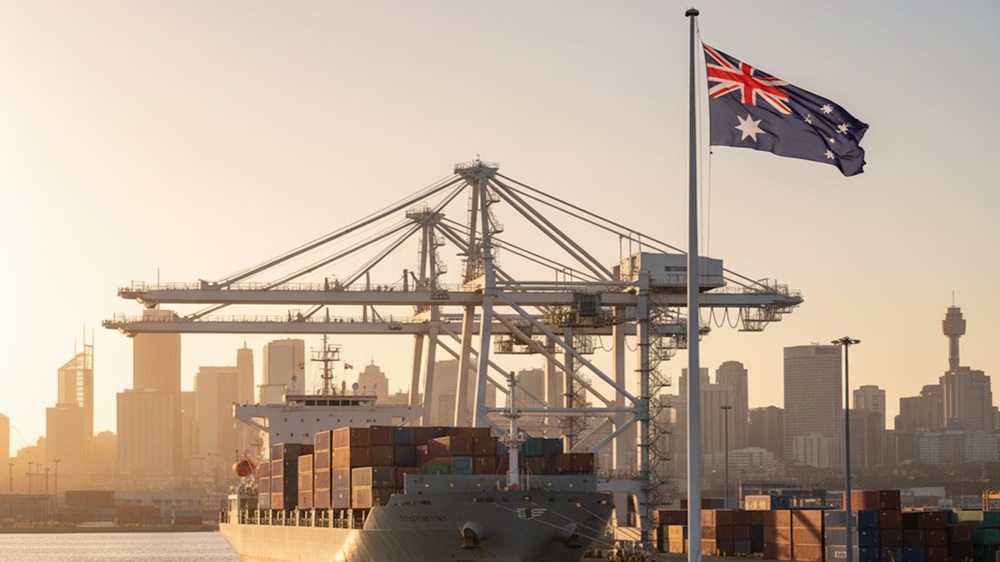
Australian listed companies with substantial overseas operations can be affected by US trade policy even if their headquarters and ASX listing are in Australia.
The impact depends on:
- Geographic revenue exposure
- Supply-chain structure
- Currency exposure
- Customer concentration
- Imported inputs
- Pricing power
- Hedging
- Commodity exposure
Therefore, investors should look beyond an ASX company's country of listing when assessing tariff sensitivity.
Tariffs and Business Investment
Trade uncertainty can influence business investment decisions.
Companies may delay:
- New factories
- Equipment purchases
- Expansion projects
- Hiring
- Acquisitions
- Inventory commitments
The RBA reported in April that concerns about US trade policy were already influencing planning at some globally oriented Australian firms, although the effect was not yet widespread among domestically focused businesses.
If uncertainty persists, the effect can potentially become more important through weaker business investment and employment.
Why the ASX Recovered After the April Shock
The market's recovery is an important part of the 2025 story.
The RBA reported that Australian equity prices rebounded after the initial April decline, while the ASX's own year-in-review shows that the index went on to record new all-time closing highs later in the year.
Several developments contributed to changing market expectations.
These included:
- Pauses or delays in some tariff measures
- Changes in expectations for global monetary policy
- Recovery in risk appetite
- Company earnings
- Commodity-market developments
- Reassessment of the likely economic damage
The Bank for International Settlements later found that tariff-related shocks accounted for a substantial share of the subsequent equity-market recovery, while also cautioning that other macroeconomic developments contributed to the rebound.
What the 2025 Tariff Shock Shows About the Australian Dollar
The 2025 experience reinforced the Australian dollar's role as an important financial-market indicator.
The currency responded rapidly to changes in:
- Global risk appetite
- US trade policy
- Commodity prices
- Interest-rate expectations
- US dollar movements
- China-related economic expectations
The RBA specifically noted that developments in the Australian dollar would remain an important determinant of Australia's economic outlook because of the currency's influence on export competitiveness, import prices and domestic inflation.
What ASX Investors Can Monitor
When assessing future tariff-related market risks, investors can monitor several indicators.
US Trade Policy
Watch changes to tariff rates, exemptions, implementation dates and trade negotiations.
China Economic Data
China's economic performance can influence commodity demand and therefore Australian exporters.
Commodity Prices
Iron ore, copper, coal, oil and gold can transmit global trade developments into Australian company earnings.
AUD/USD
The Australian dollar can provide an immediate indication of changing global risk sentiment.
ASX 200 Sector Performance
Comparing sector performance can reveal where investors see the greatest exposure to changing economic conditions.
RBA Policy
Interest-rate expectations can affect banks, property companies, consumer stocks and equity valuations.
Corporate Guidance
Company-specific earnings guidance can provide more useful information than broad market narratives when assessing actual exposure.
US Tariff Fears and Their Impact on the ASX: Key Takeaways
The 2025 tariff shock demonstrated that Australia's relatively limited direct trade exposure to the United States does not isolate its financial markets from global trade developments.
The main transmission channels were:
US tariffs → global growth expectations
Global growth expectations → commodity demand
Commodity prices → Australian exporters
Risk aversion → ASX equity prices
Risk aversion and interest-rate expectations → AUD/USD
AUD movements → export revenue and import costs
The April 2025 episode also showed how quickly these relationships can change when tariff policies are modified.
Frequently Asked Questions
How did US tariffs affect the ASX in 2025?
US tariff announcements triggered a sharp decline in Australian equities during early April 2025. The ASX subsequently recovered, with the S&P/ASX 200 reaching new all-time closing highs later in the year.
Why did the Australian dollar fall during the tariff shock?
The Australian dollar was affected by increased global risk aversion, changing expectations for global growth and movements in the US dollar. The RBA describes the AUD as a flexible exchange rate that can act as a shock absorber during global economic disruptions.
Did US tariffs directly target Australian exports?
The Australian Government said most Australian-originating goods were subject to a 10% US tariff announced in April 2025, while some categories faced separate measures.
Which ASX sectors were most exposed to tariff fears?
Mining, energy, financials, consumer-facing companies and internationally exposed businesses could experience different transmission effects. The actual impact depends on commodity prices, revenue exposure, costs, currencies and broader economic conditions.
Could tariffs affect Australian inflation?
Yes, through multiple channels. Weaker global demand can reduce inflationary pressure, while supply disruptions or a weaker Australian dollar can increase import costs. The RBA therefore characterised the inflation effects as two-sided.
Why is China important when analysing US tariffs and Australia?
China is a major trading partner for Australia, and Australian exporters are exposed to global commodity demand. A US-China trade conflict can therefore affect Australia indirectly through Chinese growth expectations and commodity prices.
Conclusion
The US tariff fears and their impact on the ASX and Australian dollar in 2025 demonstrated how closely Australia's financial markets are connected to global trade and financial conditions.
The immediate April shock produced a sharp decline in Australian equities and a significant fall in the Australian dollar. The RBA reported that Australian markets subsequently recovered as some tariff measures were paused and market expectations adjusted.
The longer-term impact was more complicated. Australia's limited direct exposure to the US reduced some of the immediate trade effects, while China's role, commodity prices, currency movements and global growth expectations remained important transmission channels.
For ASX investors, the 2025 experience highlights the value of examining individual company exposure rather than treating tariffs as a uniform market-wide risk. Export revenue, commodity exposure, imported costs, currency hedging, debt, geographic diversification and customer concentration can all influence how an individual ASX company responds to global trade-policy changes.
StockBinge provides general information for educational purposes and does not provide personal financial advice.
Talk to Our Experts
ABN 54 672 177 347 | ACN 672 177 347
Copyright © 2026 StockBinge. All Right Reserved. Design by StockBinge.