 info@stockbinge.com.au
 03 8609 4895

Blog Details
- Home
- Blog Details

Top ASX Uranium Stocks to Watch
Uranium has gone from a niche, cyclical corner of the resources market to one of the more closely watched commodity themes on the ASX.
After years of underinvestment following the Fukushima-era pullback in nuclear power, the sector is now being pulled in the opposite direction by a mix of climate policy, energy security concerns, and the rapidly growing electricity demand of artificial intelligence and data centres.
For Australian investors, that has put a group of local uranium miners, developers and explorers firmly on the radar.
This article looks at why uranium demand is strengthening, what's constraining supply, and which categories of ASX uranium stocks are worth researching.
Important: This article provides general information only and does not constitute personal financial advice. Investors should conduct their own research and consider their individual circumstances before making investment decisions.
Uranium Stocks: What Investors Should Know
Before looking at individual companies, it helps to understand the main types of uranium exposure available on the ASX.
| Uranium stock category | Typical characteristics | Key factors to research |
|---|---|---|
| Diversified miners | Uranium is a smaller part of a broader business | Commodity mix, uranium contribution, overall earnings |
| Established producers | Generating or approaching production | Production costs, uranium prices, contracts, cash flow |
| Development-stage companies | Projects being prepared for production | Funding, permitting, construction, project economics |
| Explorers | Early-stage resource discovery | Exploration results, resource size, funding |
| Specialty plays | Technology or uranium-related services | Technology milestones, commercialisation, funding |
The risk profile can vary considerably between these categories, even when companies are exposed to the same uranium market.
Why Uranium Is Back in Focus
For much of the 2010s, uranium was a forgotten commodity.
Prices languished for years after the 2011 Fukushima disaster prompted several countries to pause or wind back nuclear programs. Mining investment also declined, creating a supply backdrop that is now becoming increasingly important.
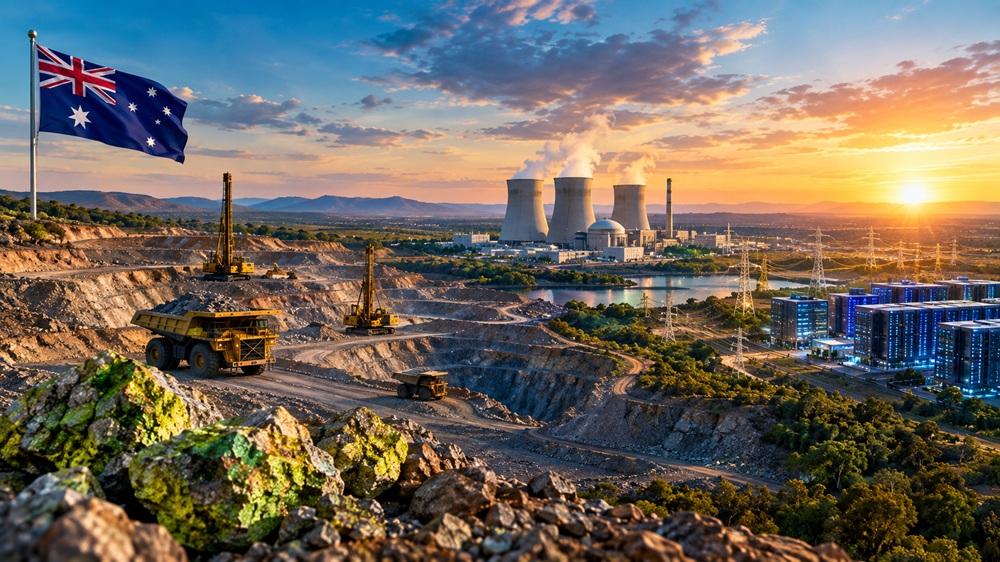
That environment has shifted substantially over the past few years, driven by several converging forces.
Nuclear Power Is Being Reframed
Nuclear power is increasingly being viewed as a source of reliable, low-carbon baseload electricity.
As governments pursue emissions-reduction targets while also dealing with grid reliability and rising electricity consumption, nuclear has returned to energy-policy discussions.
Countries are pursuing different approaches, including:
- New reactor construction
- Nuclear plant life extensions
- Reactor restarts
- Small modular reactor development
- Greater investment in nuclear fuel supply chains
This has created a stronger long-term demand narrative for uranium.
AI and Data Centres Are Creating New Electricity Demand
Artificial intelligence and data centres have added another dimension to the uranium story.
Large-scale AI infrastructure can consume enormous amounts of electricity, creating pressure on utilities and governments to secure reliable, around-the-clock power.
Nuclear energy is increasingly being considered as part of that solution because it can provide continuous electricity without the direct carbon emissions associated with fossil-fuel generation.
For uranium investors, this creates an additional potential demand driver beyond traditional nuclear-power expansion.
This connection between AI, electricity demand and infrastructure is also driving interest in ASX data centre stocks, where power availability has become an increasingly important investment consideration.
Uranium Supply Has Been Slow to Respond
The demand story is only one side of the equation.
Years of underinvestment have limited the industry's ability to rapidly increase production. New uranium projects can require:
- Significant upfront capital
- Extensive feasibility work
- Environmental approvals
- Government permits
- Infrastructure development
- Long construction timelines
- Skilled labour
Mine restarts can also take years.
That means a sustained increase in uranium demand cannot necessarily be matched with new supply immediately.
The Supply-Demand Equation Matters
The broader uranium investment thesis therefore comes down to a relatively simple question:
Can uranium production increase quickly enough to meet growing reactor demand?
If demand continues to rise while new production remains constrained, uranium prices could remain supportive for producers and developers.
However, uranium remains a cyclical commodity, and investors should expect periods of significant price volatility.
What This Means for the ASX
Australia holds some of the world's largest uranium resources, while the ASX provides exposure across several stages of the uranium development cycle.
Uranium is also part of Australia's broader resources market, giving investors another reason to research ASX mining stocks across different commodities and development stages.
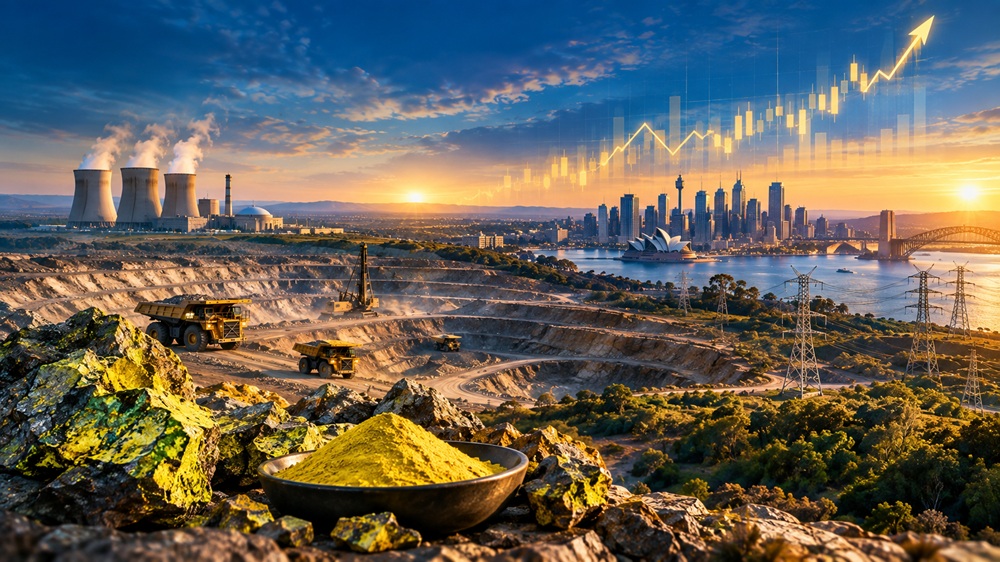
Rather than viewing all uranium stocks as interchangeable, investors can divide the sector into several broad categories.
1. Diversified Major Miners
BHP
BHP provides one of the more diversified ways to gain indirect exposure to uranium.
Uranium is not BHP's core business, but the company produces uranium as a co-product at its massive Olympic Dam operation in South Australia, alongside commodities such as copper, gold and silver.
This makes BHP very different from a pure-play uranium company.
For investors, the potential advantages include:
- Greater business diversification
- Exposure to multiple commodities
- Less dependence on uranium prices
- A large-scale operating business
The trade-off is that uranium is only one small component of BHP's overall earnings.
Investors looking at diversified resources exposure can also research lithium stocks in Australia, another major ASX commodity theme.
Research focus: uranium production contribution, Olympic Dam performance, copper exposure, capital expenditure and overall company earnings.
2. Established Uranium Producers
This category provides more direct exposure to uranium prices and production.
Paladin Energy
Paladin Energy operates the Langer Heinrich uranium mine in Namibia and has established itself as one of the more prominent ASX-listed uranium producers.
For investors researching Paladin, important areas to examine include:
- Production volumes
- Production costs
- Uranium sales and contracts
- Mine performance
- Cash generation
- Balance sheet strength
- Expansion opportunities
Because the company has direct uranium production exposure, its earnings and valuation can be more sensitive to movements in the uranium market than those of a diversified miner.
Boss Energy
Boss Energy operates the Honeymoon uranium project in South Australia and represents another direct uranium-production exposure on the ASX.
Its investment case should be assessed through factors such as:
- Production ramp-up
- Operating costs
- Uranium prices
- Sales contracts
- Cash position
- Resource growth
- Project expansion plans
The key distinction for investors is that established producers have operating assets and production economics to analyse rather than relying primarily on exploration success.
3. Development-Stage Uranium Companies
Development-stage companies sit between explorers and established producers.
Their projects may have significant resources, feasibility studies and development plans, but they are not yet generating the same level of operating cash flow as established producers.
Deep Yellow
Deep Yellow is advancing its Tumas uranium project in Namibia.
For development-stage companies such as Deep Yellow, investors should pay particular attention to:
- Feasibility studies
- Project capital requirements
- Construction schedules
- Funding requirements
- Permitting
- Expected production costs
- Expected production volumes
- Uranium price assumptions
The potential upside can be significant if a project moves successfully toward production.
However, development companies also carry construction, financing, permitting and execution risks that established producers may have already overcome.
Energy Resources of Australia
Energy Resources of Australia has significant Northern Territory uranium assets and has been associated with discussions around potential redevelopment options for its historic Ranger operation.
This is a useful example of why uranium investors need to look beyond resource size.
A project can have substantial geological potential while still facing considerable questions around:
- Regulatory approvals
- Rehabilitation obligations
- Project economics
- Development timelines
- Financing
- Technical feasibility
Published production targets should therefore be treated as estimates rather than guaranteed outcomes.
4. Uranium Explorers and Specialty Plays
At the higher-risk end of the market are uranium explorers and companies developing specialised technologies.
Exploration companies may still be defining resources, meaning their valuations can be highly sensitive to:
- Drilling results
- Resource estimates
- Exploration success
- Funding announcements
- Strategic partnerships
- Uranium-price sentiment
Silex Systems
Silex Systems represents a different type of uranium exposure.
Rather than mining uranium ore, the company is developing laser-based uranium enrichment technology.
That means investors need to assess different factors compared with traditional uranium miners, including:
- Technology development
- Commercialisation milestones
- Partnerships
- Regulatory approvals
- Funding requirements
- Long-term market potential
Specialty uranium companies can offer substantial upside if their technology succeeds, but they can also carry significant technology, funding and execution risks.
How to Approach Your Research
Uranium stocks have several sector-specific characteristics that investors should understand before making comparisons.

1. Compare Spot and Long-Term Uranium Prices
Uranium has both a spot market and a long-term contract market, and the two prices can diverge.
Many uranium producers sell a meaningful portion of their production through long-term contracts.
As a result, a change in the spot uranium price does not necessarily translate immediately into the same change in a producer's realised revenue.
What to research:
- Spot uranium price
- Long-term contract pricing
- Contract volumes
- Contract duration
- Percentage of production contracted
- Exposure to future spot prices
2. Consider Regulatory and Jurisdictional Risk
Uranium mining is subject to significant government oversight.
Projects can face additional layers of:
- Environmental approvals
- Mining permits
- Export restrictions
- Nuclear regulations
- State or territory policies
- Community and political considerations
Jurisdiction therefore matters almost as much as the resource itself.
A large uranium deposit in a difficult regulatory environment may not be as attractive as a smaller project in a jurisdiction with clearer development pathways.
3. Production Stage Matters
One of the most important distinctions between uranium companies is where they sit in the development cycle.
A simplified progression looks like this:
Explorer → Resource Definition → Feasibility → Development → Construction → Production
Risk generally changes at each stage.
An explorer may have significant geological upside but limited certainty around economics.
A producer, meanwhile, has actual operating costs, production volumes and cash flows that investors can analyse.
4. Watch the Balance Sheet
Balance-sheet strength is particularly important for uranium developers and explorers.
Projects can require substantial amounts of capital before they generate revenue.
A company with insufficient cash may need to raise additional capital through:
- Equity issuance
- Debt
- Strategic partnerships
- Joint ventures
- Asset sales
Equity raises can dilute existing shareholders, so investors should understand how a company intends to fund its next stage of development.
Key financial metrics to check
Before researching an ASX uranium stock further, consider:
- Cash and cash equivalents
- Quarterly cash burn
- Debt
- Capital expenditure requirements
- Funding runway
- Expected financing needs
- Shares outstanding
- Potential dilution
5. Compare Production Costs
Two uranium companies can benefit from the same uranium price environment but generate very different financial outcomes.
A lower-cost producer may have greater resilience if uranium prices decline.
When comparing producers, examine:
- Cost of production
- All-in sustaining costs where applicable
- Expected production volumes
- Mine life
- Ore grade
- Processing requirements
- Expansion costs
6. Look at Project Economics
For development-stage companies, don't focus only on the headline resource size.
A large resource does not automatically mean a profitable mine.
Research:
- Net present value (NPV)
- Internal rate of return (IRR)
- Initial capital expenditure
- Operating costs
- Mine life
- Expected annual production
- Payback period
- Uranium-price assumptions
Most importantly, consider whether the project's economics remain attractive under more conservative uranium-price assumptions.
A Simple ASX Uranium Research Checklist
Before adding a uranium stock to your watchlist, ask:
- Is the company producing uranium or still developing a project?
- Where is the project located?
- What is the regulatory environment?
- How large is the uranium resource?
- What are the expected production costs?
- How much capital is required to reach production?
- How much cash does the company have?
- Does it have debt or significant funding requirements?
- What percentage of future production is contracted?
- How sensitive is the project to uranium prices?
- What are the key upcoming catalysts?
- What could go wrong?
This framework can help investors separate a compelling uranium story from a company whose valuation is largely based on future expectations.
The Bottom Line
Uranium's renewed momentum isn't purely a speculative rally. It is being supported by a broader shift in how governments and large technology companies think about reliable, low-carbon electricity, while AI-driven electricity demand adds another potential layer to the long-term nuclear story.
For ASX investors, this creates exposure across a wide spectrum — from BHP's indirect uranium exposure to established producers such as Paladin Energy and Boss Energy, development-stage companies such as Deep Yellow, and higher-risk explorers and specialty technology plays.
But uranium remains a commodity sector where policy, regulation, project timelines, funding requirements and commodity prices can all materially influence returns.
The most useful starting point is therefore not simply asking which uranium stock could rise the most?
Instead, ask:
What stage is the company at, how much capital does it need, what could drive the next re-rating, and what risks could prevent the project from reaching its target?
By focusing on production status, contract exposure, project economics, regulatory conditions and balance-sheet strength, investors can build a more disciplined uranium watchlist rather than simply chasing sector momentum.
This article is for general informational purposes only and does not constitute financial advice. Always do your own research or consult a licensed financial adviser before making investment decisions.
Talk to Our Experts
ABN 54 672 177 347 | ACN 672 177 347
Copyright © 2026 StockBinge. All Right Reserved. Design by StockBinge.