 info@stockbinge.com.au
 03 8609 4895

Blog Details
- Home
- Blog Details

Surging Gold Prices Affecting ASX Gold Miners: A Comprehensive Analysis for 2025
Gold delivered an exceptional performance in 2025, creating a powerful earnings backdrop for gold producers around the world. For Australian investors, the effect was particularly relevant because the ASX hosts some of the country's largest gold miners, including Northern Star Resources, Evolution Mining and Newmont.
The surging gold prices affecting ASX gold miners became increasingly visible through higher realised gold prices, stronger revenue, improved cash generation and, in some cases, significantly higher profits.
The World Gold Council reported that gold reached 53 new all-time highs during 2025. The annual average LBMA gold price reached approximately US$3,431 per ounce, up 44% from the previous year, while fourth-quarter average prices reached US$4,135 per ounce.
However, a higher gold price does not automatically translate into the same percentage increase in shareholder returns. Mining costs, labour, energy, royalties, sustaining capital, production volumes, foreign exchange movements and mine performance all influence the final result.
Surging Gold Prices Affecting ASX Gold Miners in 2025
The relationship between gold prices and gold-miner earnings is relatively straightforward.
A gold producer sells its output at the prevailing realised price. If the price received per ounce increases while production costs remain relatively stable, the difference between revenue and costs can widen.
For example, consider a hypothetical producer with:
- Realised gold price: A$3,500/oz
- All-in sustaining cost (AISC): A$1,800/oz
- Margin: A$1,700/oz
If the realised price increases to A$4,500/oz while AISC rises only to A$2,000/oz, the theoretical margin becomes A$2,500/oz.
This simplified example demonstrates why gold miners can experience significant changes in profitability when the commodity price moves sharply.
Actual results can differ because AISC is affected by operating costs, sustaining capital and other factors.
Why Did Gold Prices Surge in 2025?
Several factors contributed to gold's strong performance.

The World Gold Council identified investment demand, geopolitical uncertainty, a weaker US dollar and expectations around interest rates among the factors supporting gold during 2025.
Central Bank Demand
Central banks remained important participants in the gold market.
The World Gold Council reported central-bank purchases of approximately 863 tonnes during 2025. While below some recent peaks, this remained historically elevated.
Investment Demand
Investment activity also increased.
Global gold ETF holdings grew by approximately 801 tonnes during 2025, while bar and coin demand reached its highest level in 12 years, according to the World Gold Council.
Geopolitical and Economic Uncertainty
Gold's traditional role as a store of value also attracted investors during periods of geopolitical and economic uncertainty.
In October 2025, the World Gold Council reported that gold had crossed US$4,000 per ounce, with investment demand supported by geopolitical tensions, dollar weakness, expectations of US Federal Reserve rate cuts and broader financial-market risks.
How Higher Gold Prices Affect Miner Revenue
The first and most visible effect is revenue.
Suppose a miner produces 1 million ounces annually. A US$500 increase in the realised gold price, with production unchanged, represents a theoretical US$500 million increase in gross revenue before considering royalties, taxes, hedging, costs and other adjustments.
This operating sensitivity is one reason investors frequently monitor the gold price alongside ASX gold-miner financial results.

However, investors should distinguish between:
Gold price
The market price of the underlying commodity.
Realised gold price
The average price the miner actually receives for the gold it sells, after relevant commercial arrangements and hedging effects.
AISC
A commonly used measure of the cost of producing and sustaining an ounce of gold.
The difference between realised price and AISC is often used as a broad indicator of operating margin, although it should not be treated as a complete measure of profitability.
Northern Star Resources: A Clear 2025 Example
Northern Star Resources provides a useful example of how higher gold prices affected an ASX-listed producer.
Northern Star reported FY2025 revenue of approximately A$6.4 billion, up 30% from FY2024. Its average realised gold price increased 29% to A$3,922 per ounce, while gold sold increased approximately 1% to 1.63 million ounces.
The company reported:
- Revenue: A$6.4 billion
- Underlying EBITDA: approximately A$3.5 billion
- Cash earnings: approximately A$2.9 billion
- Underlying free cash flow: A$536 million
- FY2025 gold sold: 1.63 million ounces
- Group AISC: A$2,163/oz
Northern Star's annual report shows cash earnings increased 59% from FY2024, while revenue increased 30%.
The company's FY2025 quarterly report also shows how production and cost performance interact with the gold-price environment. FY2025 gold sold was 1.634 million ounces at an AISC of A$2,163/oz.
This illustrates an important point: the benefit of a higher gold price can be substantial, but investors still need to monitor production volumes and costs.
Evolution Mining and Higher Gold Prices
Evolution Mining also reported significantly stronger financial results in FY2025.
Evolution's FY2025 results showed statutory net profit after tax of approximately A$926 million, compared with A$422 million in FY2024. Underlying NPAT increased to approximately A$958 million, from A$482 million.
The company specifically highlighted the significant movement in the gold price during FY2025, particularly during the second half.
This is another example of how commodity-price movements can flow through to miner earnings, although company-specific factors such as production mix, mine performance and costs also matter.
Newmont: Global Scale With ASX Exposure
Newmont provides a different type of exposure because it is a global producer listed on both the NYSE and ASX.
Newmont reported 5.9 million attributable gold ounces for 2025 and gold by-product AISC of US$1,358 per ounce. The company generated US$7.3 billion of free cash flow during the year.
Newmont also reported US$7.2 billion of net income and US$13.5 billion of adjusted EBITDA.
These figures show the potential scale of cash-flow generation during an elevated gold-price environment, although Newmont's results are influenced by operations across multiple countries and commodities rather than Australia alone.
Gold Price Versus Mining Costs
One of the biggest mistakes investors can make is focusing only on the gold price.
Mining companies also face rising costs.
These can include:
- Labour
- Diesel and energy
- Equipment
- Contractor expenses
- Processing
- Underground development
- Royalties
- Sustaining capital
- Exploration
- Environmental and rehabilitation obligations
This means that an increase in the gold price does not necessarily produce an equivalent increase in profit.
The Importance of AISC
AISC provides investors with a useful framework for assessing this relationship.
If gold prices rise faster than AISC, the margin per ounce can expand.
If costs rise almost as quickly as the gold price, the benefit can be more limited.
For example:
| Scenario | Gold Price | AISC | Indicative Difference |
|---|---|---|---|
| Lower-price environment | A$3,000/oz | A$2,000/oz | A$1,000/oz |
| Higher-price environment | A$4,000/oz | A$2,200/oz | A$1,800/oz |
| Higher costs | A$4,000/oz | A$2,800/oz | A$1,200/oz |
These figures are illustrative rather than forecasts.
The key point is that investors should monitor both sides of the margin equation.
Australian Dollar Gold Price Matters
For ASX-listed Australian gold miners, the Australian-dollar gold price is particularly important.
International gold is generally quoted in US dollars, while Australian miners report many of their costs and financial results in Australian dollars.
Therefore, movements in the AUD/USD exchange rate can influence the price received in Australian-dollar terms.
For Australian producers, a weaker Australian dollar can increase the AUD value of US-dollar-denominated gold revenue, all else equal.
This creates another variable for investors to monitor alongside the international gold price.
The World Gold Council's 2025 mid-year data showed gold's June-end price at approximately A$4,995 per ounce, with an 18.5% year-to-date return in Australian-dollar terms at that point.
Production Growth Can Amplify the Benefit
Higher prices are only one part of the equation.
A company producing more ounces can potentially generate additional revenue at the same commodity price.
This makes production guidance particularly important.
Northern Star, for example, reported 1.634 million ounces of gold sold in FY2025 and guided to 1.7–1.85 million ounces for FY2026, alongside FY2026 AISC guidance of A$2,300–A$2,700 per ounce.
The guidance also included significant growth capital spending.
This demonstrates the trade-off investors should consider: increasing production can create additional exposure to higher gold prices, but expansion projects also require substantial capital.
Gold Hedging Can Change the Impact
Not every miner receives the full spot gold price on every ounce produced.
Some companies use hedging arrangements to manage price risk.
Hedging can provide greater revenue certainty, but it can also reduce the immediate benefit from a rapidly rising spot price on the hedged portion of production.
Therefore, when researching an ASX gold miner, investors should examine:
- Hedged ounces
- Average hedge price
- Hedge maturity
- Unhedged production
- Expected future production
- Realised gold price
This can help explain why two gold miners may report different financial outcomes even when operating in the same commodity environment.
Exploration and Mine Life Become More Important
A strong gold-price environment can also change the economics of exploration and mine development.
Projects that were previously marginal may become more attractive when the assumed gold price increases.
Higher prices can potentially support:
- Mine extensions
- Underground development
- New processing capacity
- Exploration
- Resource conversion
- Acquisition opportunities
However, higher commodity prices can also increase competition for labour, equipment and contractors.
Companies therefore still need disciplined capital allocation.
Risks Behind Surging Gold Prices
Although higher gold prices can benefit producers, the trend is not guaranteed to continue indefinitely.
Gold Price Reversal
A decline in gold can reduce revenue and operating margins.
Cost Inflation
Mining costs can rise alongside commodity prices.
Production Problems
Grade variations, equipment failures, weather, processing problems and operational disruptions can reduce production.
Capital Expenditure
Large development projects may require billions of dollars in capital and can experience cost overruns or delays.
Currency Movements
Changes in the Australian dollar can affect both revenue and costs.
Regulatory and Environmental Requirements
Mining companies operate under extensive environmental, land-access, safety and regulatory requirements.
These factors can materially affect project economics.
What ASX Investors Can Monitor
When researching ASX gold miners, investors can create a simple monitoring framework.
Gold Price
Track both US-dollar gold and Australian-dollar gold.
Realised Gold Price
Check what the company actually received rather than relying only on spot prices.
AISC
Compare the company's AISC with its realised price.
Production
Look at actual ounces produced and sold versus guidance.
Free Cash Flow
Determine whether higher earnings are translating into cash generation.
Balance Sheet
Check cash, debt and liquidity.
Mine Life
Long-life operations may provide different characteristics from short-life assets.
Growth Capital
Determine how much money is being invested in expansions and new projects.
Dividends and Capital Returns
Higher cash generation can provide greater flexibility for dividends, buybacks, debt reduction or reinvestment, depending on the company's capital-allocation policy.
ASX Gold Miners and the Broader Gold Market
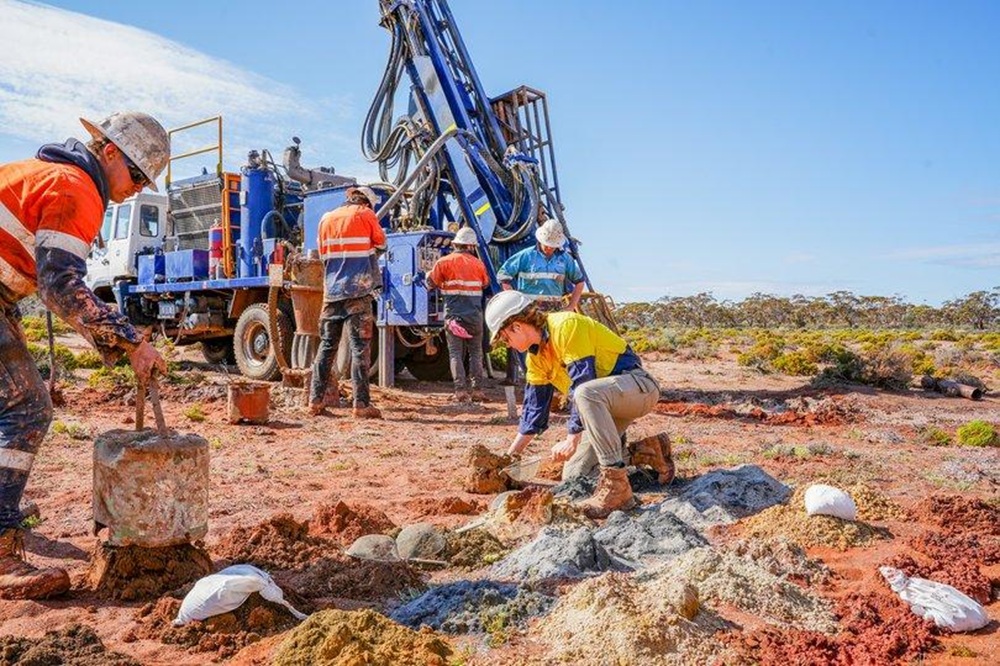
The strong gold market also contributed to greater interest in gold-related listings on the ASX.
The ASX's 2025 listing review highlighted several international gold companies that joined the exchange.
Robex Resources (ASX:RXR) raised A$120 million and dual-listed on the ASX, while DPM Metals (ASX:DPM) dual-listed following its acquisition of Adriatic Metals. Orezone Gold (ASX:ORE) also raised A$75 million and dual-listed on the exchange.
The ASX also recorded BMC Minerals (ASX:BMC), a Canadian gold, silver, copper and zinc explorer, as a new listing in December 2025.
This shows how strong commodity-market conditions can influence not only established producers but also the pipeline of companies seeking ASX capital and investor exposure.
What Higher Gold Prices Could Mean for ASX Gold Stocks
The 2025 experience demonstrates several potential transmission channels:
Higher gold price → higher realised revenue
Higher revenue → potentially stronger operating margins
Higher margins → potentially stronger cash flow
Stronger cash flow → greater financial flexibility
However, each step depends on production, costs, hedging, capital expenditure and company-specific execution.
This is why investors should avoid assuming that all ASX gold miners will respond identically to the same gold-price movement.
Frequently Asked Questions
Why did ASX gold miners benefit from higher gold prices in 2025?
Higher gold prices increased the potential revenue generated from each ounce sold. Where production and costs remained controlled, this could translate into stronger operating margins, earnings and cash flow.
Which ASX gold miners were affected by the 2025 gold-price surge?
Major ASX-listed producers including Northern Star Resources, Evolution Mining and Newmont reported strong financial outcomes during 2025. However, their operations, production profiles and cost structures differ significantly.
Does a higher gold price always mean higher profits?
No. Higher labour, energy, processing, development and sustaining costs can offset part of the increase in gold revenue. Production disruptions and hedging can also affect results.
What is AISC for a gold miner?
AISC, or all-in sustaining cost, is a commonly used industry metric intended to capture the cost of producing gold while sustaining existing operations. It is useful for comparison but should not be treated as a complete measure of a company's total profitability.
Why is the Australian-dollar gold price important?
Australian gold miners generally report revenue and costs in Australian dollars, while global gold is priced in US dollars. Therefore, movements in the AUD/USD exchange rate can affect the Australian-dollar value of gold revenue.
What should investors monitor besides the gold price?
Investors can examine realised gold prices, AISC, production, free cash flow, debt, mine life, capital expenditure, hedging and management's capital-allocation decisions.
Conclusion
The surging gold prices affecting ASX gold miners in 2025 created a significantly stronger revenue and earnings environment for many producers.
Gold recorded 53 new all-time highs during the year, while the annual average LBMA price reached approximately US$3,431 per ounce.
For Australian producers, the impact was visible in company results. Northern Star reported a 29% increase in its average realised gold price and a 30% increase in revenue in FY2025, while Evolution Mining reported a substantial increase in statutory and underlying profit.
However, gold-price exposure is only one part of the investment picture. Production, AISC, currency movements, hedging, mine life, capital requirements and operational execution can all influence how individual companies benefit from a strong gold market.
For investors researching ASX gold stocks, comparing these factors can provide a more complete picture than looking at the gold price alone.
StockBinge provides general information for educational purposes and does not provide personal financial advice.
Talk to Our Experts
ABN 54 672 177 347 | ACN 672 177 347
Copyright © 2026 StockBinge. All Right Reserved. Design by StockBinge.