 info@stockbinge.com.au
 03 8609 4895

Blog Details
- Home
- Blog Details
How the ASX Is Adapting to Global Trade Tensions: What Investors Need to Know
Global trade tensions remain an important factor for financial markets in 2026. Changes in US tariff policy, evolving US-China relations, supply-chain disruptions and geopolitical uncertainty are influencing commodity prices, currencies, inflation expectations and international investment flows.
For Australian investors, these developments matter because the Australian economy remains closely connected to global trade. China is particularly important: Australia and China recorded approximately A$326 billion in two-way goods and services trade in 2025, with Australian exports to China reaching around A$196 billion.
At the same time, Australia is facing direct changes to access to the US market. Australia's Department of Foreign Affairs and Trade says US tariffs applying to Australian imports include a 12.5% Section 301 tariff from July 2026, alongside various sector-specific Section 232 tariffs.
This article examines how global trade tensions are affecting the ASX in 2026, which sectors are most exposed, how listed companies are responding and what investors can monitor.
Global Trade Tensions in 2026
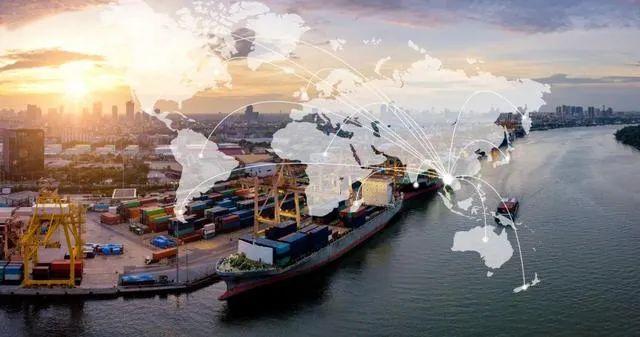
US Tariffs Have Become a Direct Australian Issue
The trade environment has changed considerably since 2025.
The United States has introduced and adjusted tariffs affecting numerous trading partners, including Australia. According to Australia's Department of Foreign Affairs and Trade, the US implemented a 12.5% tariff on imports from Australia from 24 July 2026, subject to exemptions. Australia also faces sector-specific tariffs covering products including steel, aluminium, automobiles, semiconductors and other goods.
The Reserve Bank of Australia has noted that recent US trade-policy changes have affected many trading partners, including Australia, although the direct impact on Australia's exports is assessed as limited so far.
The bigger issue for Australian markets may therefore be the broader effect of tariffs on global growth, commodity prices, supply chains and financial markets rather than tariffs alone.
US-China Trade Relations Remain Important
China remains Australia's largest trading relationship.
That makes changes in Chinese industrial activity, manufacturing demand, infrastructure investment and commodity consumption particularly important for ASX-listed resource companies.
The RBA has highlighted the potential for slower global growth and lower traded-goods prices when tariffs rise. Its earlier analysis also noted that Australia's resource-heavy export mix can provide some protection because Australia is a relatively low-cost producer of several major commodities.
However, the effect is not uniform across the ASX.
Companies with significant exposure to global commodity prices, international manufacturing, US consumers or imported inputs can experience very different outcomes.
How Trade Tensions Affect the ASX
Trade policy can influence Australian shares through several channels.
1. Commodity Prices
Australia is a major exporter of iron ore, coal, gold, lithium and other commodities.
If tariffs weaken global industrial activity, demand for some commodities can fall. That can put pressure on the earnings expectations of mining companies.
On the other hand, geopolitical uncertainty can increase demand for commodities such as gold.
Recent ABS data illustrates this divergence. In the year to June 2026, Australia's Export Price Index increased 3.9%, with gold and coal among the major positive contributors, while metalliferous ores and metal scrap were a negative contributor.
2. Currency Movements
Trade uncertainty can also affect the Australian dollar.
Because the AUD is influenced by commodity prices, interest-rate expectations and global risk sentiment, changes in international trade conditions can feed through into the currency.
A weaker Australian dollar can increase the Australian-dollar value of overseas earnings for companies generating substantial revenue offshore.
However, it can also increase the cost of imported goods, equipment and inputs.
3. Supply-Chain Disruption
Tariffs can encourage companies to change suppliers, shipping routes and manufacturing locations.
That creates both risks and opportunities for ASX-listed companies.
Logistics technology businesses, for example, can benefit from greater demand for supply-chain visibility and trade-compliance tools.
WiseTech Global recently launched an Ocean Freight Risk Outlook designed to help businesses anticipate changes in ocean freight capacity across major trade routes. The company specifically identifies geopolitical conflicts and tariff tensions as factors that can rapidly change trade-route conditions.
Impact on Key ASX Sectors
Mining and Resources
Iron Ore Companies Remain Linked to Global Industrial Demand
Major Australian miners including:
- BHP Group (ASX: BHP)
- Rio Tinto (ASX: RIO)
- Fortescue (ASX: FMG)
remain exposed to global commodity markets.
Their earnings are influenced by commodity prices, production volumes, operating costs, exchange rates and demand from major customers.
China's economic activity is particularly relevant because of Australia's extensive trade relationship with the country.
However, it would be too simplistic to assume that higher US tariffs automatically translate into weaker earnings for Australian miners. The effect depends on the specific commodity, Chinese policy responses, global supply conditions and changes in commodity prices.
Gold Can Provide a Different Exposure
Gold can behave differently from industrial commodities during periods of uncertainty.
When investors seek defensive or safe-haven assets, gold demand can increase. Australian gold producers therefore provide exposure to a commodity whose price drivers differ from those affecting iron ore or some base metals.
Companies such as Northern Star Resources (ASX: NST) and Newmont (ASX: NEM) can therefore be relevant when researching the relationship between geopolitical uncertainty and Australian-listed gold exposure.
For further research, see our guide to [ASX gold stocks in 2026].
Agriculture and Food Exporters
Agriculture is another area where trade policy can have a direct impact.
Australian exporters operate across markets including China, the United States, Japan, Southeast Asia and the Middle East.
Changes in tariffs, quotas and market access can influence export volumes and pricing.
The experience of Australian wine exporters illustrates how quickly trade conditions can change. After China's earlier tariffs on Australian wine were removed, exports to China recovered, but Australian wine exports subsequently faced weaker global demand and changing consumption patterns.
Companies such as Treasury Wine Estates (ASX: TWE) therefore face a combination of trade, consumer-demand, inventory and regional-market risks rather than a simple tariff-only problem.
In 2026, TWE announced a major restructuring of its US business, including a substantial non-cash charge and changes to production and inventory management.
This highlights why investors need to examine individual company exposure rather than treating all Australian exporters in the same way.
Steel and Manufacturing
BlueScope Steel Illustrates the Complexity of Tariffs
BlueScope Steel (ASX: BSL) provides a useful example of how tariffs can create both challenges and opportunities.
The company has significant US operations and has invested approximately A$5 billion across 16 US states. Its North Star BlueScope operation produces more than 3 million tonnes of steel annually.
BlueScope has said US tariffs affect approximately 300,000 tonnes per year of its Australian exports to the US.
At the same time, the company said higher US steel prices could have a positive effect on its US operations.
Its FY2026 results demonstrate the importance of geographic diversification. BlueScope reported underlying EBIT of A$1.034 billion from North America compared with A$188 million from Australia.
This is an example of why investors should examine where an ASX-listed company's assets and earnings are actually located rather than assuming that an Australian listing means the company has primarily Australian economic exposure.
Technology and Logistics
Trade Complexity Can Increase Demand for Supply-Chain Technology
Trade tensions can create additional compliance and logistics requirements.
Companies need to track tariffs, customs classifications, supplier networks, shipping routes and regulatory requirements.
WiseTech Global (ASX: WTC) is positioned within this part of the market through its logistics execution and supply-chain technology.
In 2026, WiseTech announced an agreement to acquire FRDM.ai, a company focused on supply-chain risk and compliance intelligence. The technology maps supplier networks and helps businesses manage human-rights risks and regulatory compliance.
This illustrates a broader theme: trade fragmentation can create additional complexity for businesses, increasing demand for software that helps companies manage international supply chains.
Investors researching ASX technology exposure can also explore our coverage of [ASX technology stocks in 2026].
The Australian Dollar and Trade Uncertainty
Why AUD/USD Matters to ASX Investors
Currency movements are an important transmission mechanism between global trade conditions and Australian shares.
A weaker Australian dollar can benefit companies that generate substantial overseas revenue because foreign earnings translate into more Australian dollars.
Exporters can also become more competitive in international markets.
However, a weaker currency can increase the Australian-dollar cost of imported machinery, technology, fuel and other inputs.
The RBA has identified exchange-rate movements as one of several factors that can influence how global trade developments affect Australia.
For investors, the important point is that currency exposure differs significantly from company to company.
ASX Companies Responding to Trade Changes
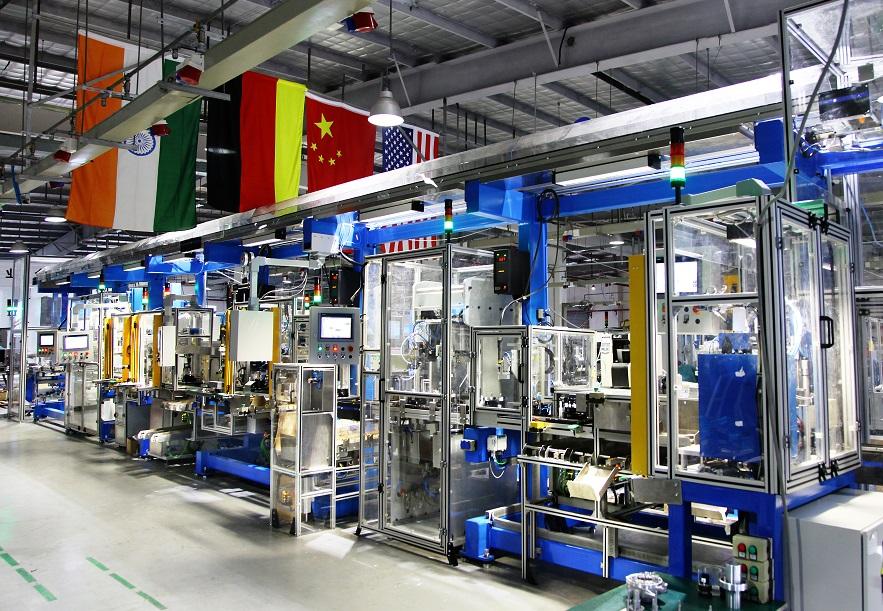
Geographic Diversification
Companies with operations across multiple regions can have different levels of exposure to individual trade disputes.
Diversification does not eliminate trade risk, but it can change where that risk appears in a company's earnings.
BlueScope's large North American manufacturing footprint is one example.
Treasury Wine Estates' restructuring of its US business is another example of a company adjusting its operations in response to changing market conditions.
Supply-Chain Technology
Businesses are also investing in digital tools to improve visibility across international supply chains.
This includes:
- Customs and tariff compliance
- Supplier monitoring
- Freight optimisation
- Route planning
- Inventory management
- Trade-risk monitoring
- Supply-chain transparency
The expansion of these capabilities is one reason logistics technology remains relevant even when global trade becomes more complicated.
Regional Trade Diversification
Australia is also pursuing broader trade relationships.
A significant development in 2026 was the conclusion of negotiations for the Australia-European Union free trade agreement.
The agreement is designed to expand market access and diversify Australia's trading relationships. Reuters reported that the agreement removes tariffs on a wide range of products and includes provisions covering agriculture, critical minerals, hydrogen, investment and services.
For Australian companies, broader market access can reduce reliance on individual export destinations over time.
However, diversification is a gradual process. China remains Australia's largest two-way trading partner, meaning changes in Chinese economic conditions will continue to matter substantially for Australian businesses.
What Investors Can Monitor in 2026
Rather than reacting to every tariff announcement, ASX investors can monitor several measurable indicators.
1. Commodity Prices
Watch iron ore, coal, gold, copper, lithium and other commodities relevant to individual companies.
2. AUD/USD
Currency movements can materially affect companies with substantial offshore revenue or imported costs.
3. China Economic Data
Industrial production, infrastructure investment, property activity and manufacturing conditions can influence demand for Australian commodities.
4. US Tariff Announcements
Investors should monitor changes to tariff rates, exemptions, sector-specific measures and trade negotiations.
Australia's DFAT maintains a regularly updated page covering US tariffs affecting Australian exporters.
5. Company Geographic Exposure
Read annual reports and investor presentations to determine:
- Where revenue is generated
- Where products are manufactured
- Where major customers are located
- Which currencies affect earnings
- Which inputs are imported
- How much production is exposed to tariffs
6. Balance Sheets and Cash Flow
Companies facing trade uncertainty may need to absorb higher logistics costs, hold additional inventory or invest in alternative suppliers.
Strong cash generation and manageable debt can therefore become particularly important research factors.
How Trade Tensions Could Affect Different ASX Sectors
| ASX sector | Potential trade exposure | Key factors to monitor |
|---|---|---|
| Mining | High | Commodity prices, China demand, FX |
| Agriculture | High | Tariffs, quotas, export destinations |
| Steel | High | US tariffs, steel spreads, input costs |
| Technology | Moderate | Global customers, supply chains, regulation |
| Logistics | Mixed | Trade volumes, route changes, compliance demand |
| Gold | Indirect | Gold price, USD, investor demand |
| Healthcare | Mixed | Imported inputs, overseas revenue |
| Utilities | Generally lower direct exposure | Interest rates, energy costs, regulation |
| Consumer staples | Mixed | Imported costs, consumer demand, FX |
These are broad sector characteristics rather than predictions. Individual companies can have very different exposures.
Risks for ASX Investors
Trade tensions create several risks that investors should consider.
Lower Global Growth
Higher trade barriers can reduce international trade and economic activity.
The RBA has previously noted that higher tariffs and trade-policy uncertainty can result in slower global growth and lower prices for traded goods.
Supply-Chain Disruptions
Changes in shipping routes, supplier relationships or customs requirements can increase costs and delay deliveries.
Currency Volatility
Large movements in the Australian dollar can change the value of overseas earnings and imported costs.
Commodity Price Volatility
Australian resource companies remain particularly sensitive to global commodity cycles.
Policy Uncertainty
Tariff policies can change relatively quickly, making corporate planning more difficult.
The RBA's 2026 analysis also highlights geopolitical risks through several channels, including trade restrictions, supply-chain disruptions, capital-flow reversals and changes in risk premiums.
Long-Term Outlook for the ASX
The impact of global trade tensions on the ASX is unlikely to be uniform.
Australia's resource exposure means global commodity demand will remain an important driver. At the same time, Australian companies are increasingly diversified across Asia, North America and other international markets.
The country's trade relationships are also evolving.
The Australia-EU trade agreement provides another example of efforts to broaden market access, while Australia's deep economic relationship with China remains significant.
Technology is another area worth monitoring. Increasing trade complexity may create demand for logistics software, compliance systems, supply-chain intelligence and digital infrastructure.
For investors researching the broader Australian market, understanding the composition of the ASX 200 can also provide useful context. Our guide to [building an ASX 200-focused portfolio] explains how the index's concentration in financials and materials affects diversification.
Conclusion
Global trade tensions remain an important macroeconomic factor for ASX investors in 2026.
US tariff policy, China-related trade developments, supply-chain changes and geopolitical uncertainty can affect Australian companies through commodity prices, currencies, export demand and input costs.
However, the impact varies significantly between companies.
Resource producers remain linked to global commodity cycles, exporters can be affected by tariffs and market access, manufacturers may face changing input costs, while logistics and supply-chain technology companies can experience additional demand for trade-compliance and visibility solutions.
The key for investors is to look beyond the headline tariff rate and examine each company's actual exposure: its markets, supply chains, currencies, customers, costs and balance sheet.
For anyone researching ASX shares in 2026, global trade developments are therefore best viewed as one part of a broader company and sector analysis rather than as a standalone investment signal.
FAQs
How do US tariffs affect the ASX?
US tariffs can affect ASX companies indirectly through global economic growth, commodity prices, currency movements, supply chains and demand for Australian exports. Some companies with significant US exposure can also experience more direct effects.
Is Australia directly affected by US tariffs in 2026?
Yes. Australia's Department of Foreign Affairs and Trade says Australian exports face a 12.5% US tariff from July 2026, subject to exemptions, along with several sector-specific tariffs.
Which ASX sectors are most exposed to global trade tensions?
Mining, agriculture, steel, manufacturing and internationally exposed companies can have significant trade exposure. Technology and logistics companies can also be affected, although some may benefit from increased demand for supply-chain management and compliance technology.
Does a weaker Australian dollar benefit ASX exporters?
It can. A weaker AUD can increase the Australian-dollar value of foreign earnings and improve the price competitiveness of some exporters. However, companies that rely heavily on imported equipment or inputs may face higher costs.
Why is China important for ASX investors?
China remains Australia's largest trading partner. Australia and China recorded approximately A$326 billion in two-way goods and services trade in 2025, while Australian exports to China were approximately A$196 billion.
Can trade tensions benefit gold stocks?
Gold can respond differently from industrial commodities because investor demand for defensive assets can increase during periods of uncertainty. However, gold-mining companies also face operational, cost, currency and company-specific risks.
What should investors check when researching ASX companies affected by tariffs?
Investors can examine geographic revenue exposure, manufacturing locations, supply chains, currency exposure, commodity sensitivity, tariff exemptions, operating costs, debt and cash flow.
Are global trade tensions likely to affect every ASX company?
No. Exposure varies considerably between businesses. A company that generates most revenue domestically may have a different risk profile from an exporter or multinational manufacturer.
Financial Disclaimer: This article is for general information and educational purposes only and does not constitute personal financial advice. Investors should conduct their own research and consider their individual circumstances or seek advice from a licensed financial adviser before making investment decisions.
Talk to Our Experts
ABN 54 672 177 347 | ACN 672 177 347
Copyright © 2026 StockBinge. All Right Reserved. Design by StockBinge.