 info@stockbinge.com.au
 03 8609 4895

Blog Details
- Home
- Blog Details
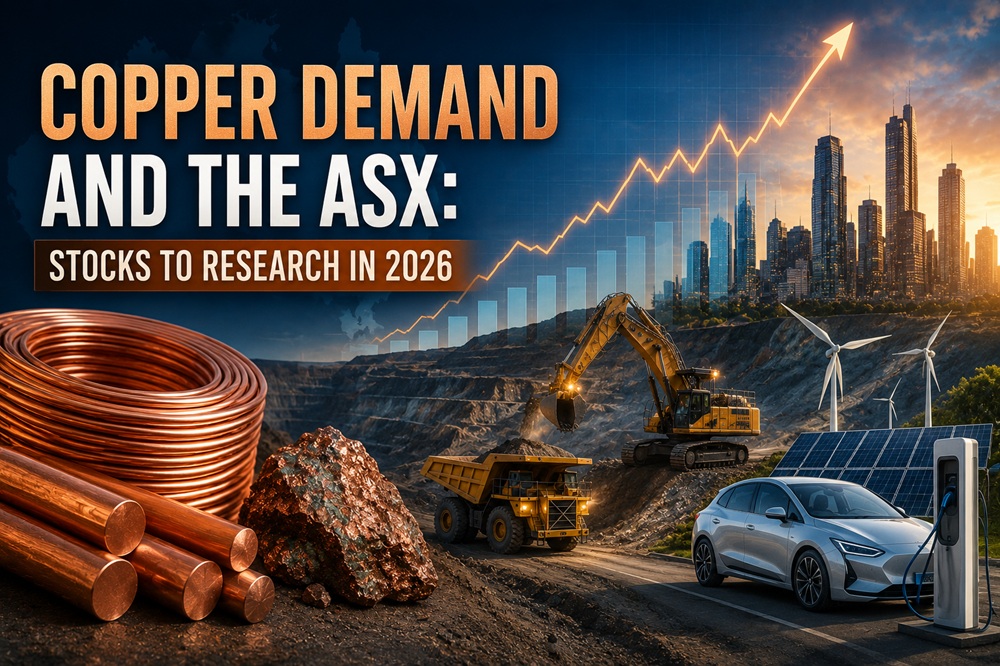
Copper Demand and the ASX: Stocks to Research in 2026
Copper has quietly become one of the most closely watched commodities on the ASX. Once viewed primarily as an industrial metal linked to construction and manufacturing, copper is now at the centre of three major investment themes: artificial intelligence infrastructure, global electrification, and ageing power grids.
For Australian investors, this shift has put a range of ASX-listed miners, developers and explorers firmly on the radar.
This article explores why copper demand is rising, the challenges facing global supply, and the different categories of ASX copper stocks worth researching in 2026. As always, this is general information, not personal financial advice. The goal is to help you build a research watchlist and investigate individual companies before making any investment decision.
Why Copper Demand Is Suddenly Front-Page News
For much of the 2010s, copper demand was heavily influenced by Chinese construction, infrastructure and manufacturing activity. That picture is changing as several long-term trends increasingly overlap.
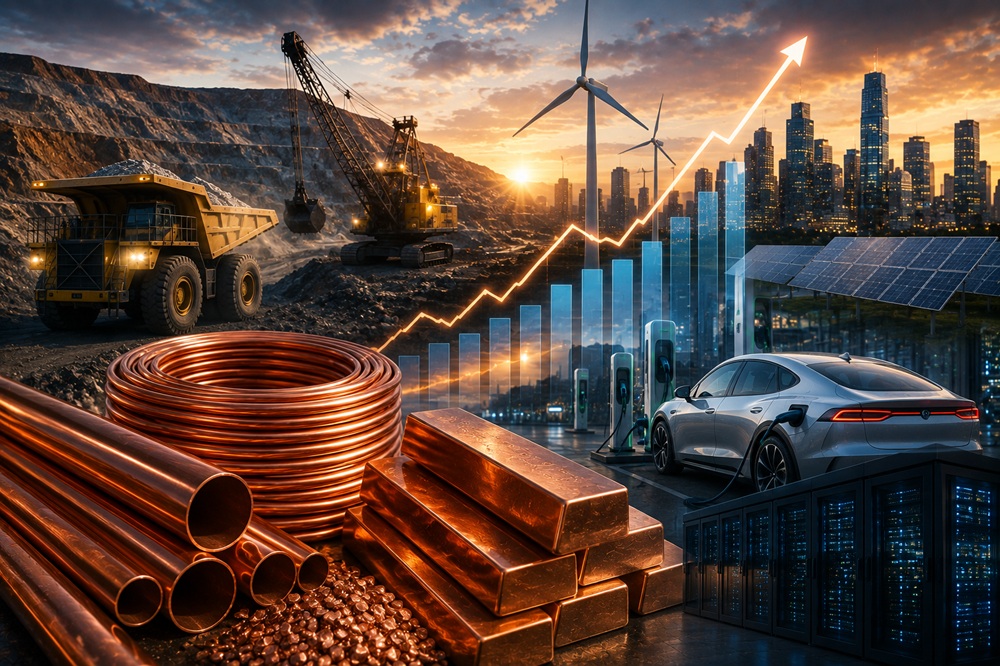
1. AI and Data Centres Are Increasing Copper Demand
The rapid expansion of artificial intelligence and data centres is creating another source of copper demand.
Hyperscale data centres require substantial amounts of copper across server infrastructure, power distribution, electrical systems and cooling equipment. As AI workloads expand and more computing capacity comes online, electricity infrastructure around these facilities also needs to scale.
This creates additional demand for copper beyond the servers themselves, particularly through the power networks required to supply increasingly energy-intensive computing facilities.
Investors interested in this theme can also explore ASX data centre stocks in 2026 and how companies such as NextDC, Macquarie Technology Group and DigiCo are positioned.
2. Electrification Is Driving Structural Demand
The broader electrification of transport and energy systems is another major driver.
Electric vehicles generally require considerably more copper than conventional petrol-powered vehicles. Demand also comes from the infrastructure supporting them, including charging networks and electricity distribution.
The broader electrification theme also supports investor interest in lithium stocks in Australia, particularly companies exposed to battery-material demand.
The same trend extends across:
- Solar power installations
- Wind farms
- Battery storage
- Electric vehicle charging infrastructure
- Transmission networks
- Distribution-grid upgrades
- Industrial electrification
Ageing electricity networks in markets such as the US, Europe and Australia are also expected to require significant investment and replacement over time.
3. Copper Supply Is Difficult to Expand Quickly
The other side of the equation is supply.
Developing a new copper mine can take a decade or more once permitting, financing, construction and commissioning are taken into account. Existing mines are also facing challenges from declining ore grades, which can require miners to process increasingly large quantities of rock to produce the same amount of copper.
Supply can also be disrupted by:
Weather events
Operational problems
Labour disruptions
Regulatory changes
Infrastructure issues
Delays to new mining projects
This creates a potentially difficult environment for copper producers if demand continues growing faster than new supply can come online.
The combination of long-term demand growth and constrained supply expansion is one of the main reasons copper has attracted increasing investor attention.
What This Means for the ASX
Australia is an important mining jurisdiction, and the ASX provides exposure to copper companies across a wide range of market capitalisations and development stages.
This gives investors exposure to a broader range of ASX mining stocks, from established diversified miners to smaller resource companies.

Rather than treating all copper stocks as the same, investors can divide the sector into several broad categories.
Large-Cap Diversified Miners
Large diversified miners can provide copper exposure without making it the entire investment case.
BHP is one example. The company produces copper alongside commodities such as iron ore and has significant copper exposure through operations including Olympic Dam in South Australia and international copper assets.
The advantage of this model is diversification. If copper prices weaken, earnings from other commodities can potentially provide some balance.
The trade-off is that investors are not getting pure copper exposure. Copper represents only part of the company's overall portfolio.
Pure-Play and Mid-Tier Copper Producers
For investors seeking more direct exposure to copper prices, mid-tier producers can be particularly interesting.
Sandfire Resources is one of the better-known copper-focused names on the ASX. Its operations include the MATSA complex in Spain and the Motheo project in Botswana, giving the company exposure to established production as well as growth.
Other names worth researching in this category include:
- Capstone Copper
- Aeris Resources
- 29Metals
These companies can offer more direct sensitivity to copper prices than diversified miners. However, investors also need to consider operational risk, production costs, mine life, debt and balance-sheet strength.
Growth and Development-Stage Companies
The next category consists of companies moving toward production or developing projects that could generate meaningful future cash flow.
Develop Global is an example of a company operating in this broader development and mining-services space, with exposure to projects and mining infrastructure rather than fitting neatly into the traditional pure-play copper producer category.
For development-stage companies, investors should pay close attention to:
- Project economics
- Construction timelines
- Funding requirements
- Permitting
- Expected production
- Capital expenditure
- Expected operating costs
- Potential financing or dilution
The closer a project gets to production, the more the investment case can shift from exploration potential toward expected future cash flow.
Copper Explorers and Small-Cap Stocks
At the highest-risk end of the spectrum are copper explorers and small-cap companies.
Names such as Alma Metals, Cobre and Anax Metals can provide exposure to earlier-stage copper projects in Australia and overseas.
These companies can experience substantial share-price movements following:
- Positive drilling results
- Resource upgrades
- Exploration discoveries
- Feasibility studies
- Project partnerships
- Takeover interest
- Funding announcements
However, many exploration companies remain pre-revenue, meaning investors face significant geological, funding and execution risks.
For that reason, early-stage copper stocks may belong on a research watchlist rather than automatically in a portfolio until the underlying project has been properly assessed.
How to Research ASX Copper Stocks
A strong copper thesis does not automatically make every copper stock a good investment.

Before adding a company to your research list, consider the following factors.
1. How Mature Is the Copper Asset?
An operating mine is fundamentally different from an exploration project.
Ask:
- Is the company already producing copper?
- Does it have a defined mineral resource?
- Has a feasibility study been completed?
- When could production potentially begin?
- How long could the mine operate?
A company with an operating mine and established reserves generally has a very different risk profile from an explorer drilling its first targets.
2. What Is the Cost of Production?
Copper prices can fluctuate considerably.
Companies with competitive production costs generally have more room to absorb a downturn in copper prices than high-cost producers.
Look at measures such as cash costs and all-in sustaining costs (AISC) where applicable, while also considering the quality and longevity of the underlying resource.
3. How Strong Is the Balance Sheet?
Balance-sheet strength becomes particularly important when researching development-stage and exploration companies.
Check:
- Cash on hand
- Debt levels
- Quarterly cash burn
- Funding requirements
- Capital expenditure
- Potential equity dilution
- Expected cash runway
A large copper resource is not necessarily valuable to shareholders if the company cannot afford to develop it.
4. What Is the Jurisdiction Risk?
Where a company operates can materially affect its risk profile.
Investors should consider:
- Political stability
- Mining regulations
- Government policy
- Taxation
- Permitting requirements
- Infrastructure
- Local community relationships
- Access to skilled labour and services
Assets in established mining jurisdictions can still face permitting and operational challenges, but the risk profile may differ substantially from projects operating in less predictable environments.
5. How Much of the Company Is Actually Exposed to Copper?
Not every company described as a copper stock provides the same level of exposure.
For diversified miners, copper may represent only one part of the overall business.
Before investing, understand:
What percentage of production, revenue or earnings is actually linked to copper?
This can help investors distinguish between a diversified mining company with copper exposure and a genuine copper-focused investment.
Key Takeaways for ASX Copper Investors
The copper investment case in 2026 is being shaped by several structural trends rather than a single source of demand.
The key themes include:
- AI infrastructure is increasing electricity and data-centre infrastructure requirements.
- Electrification is increasing copper use across vehicles, charging networks and renewable-energy infrastructure.
- Grid investment is creating additional long-term demand for copper.
- Declining ore grades are making production more challenging at some existing mines.
- New copper supply takes years to develop, limiting how quickly production can respond to higher prices.
- ASX investors have multiple ways to gain exposure, ranging from diversified miners to producers, developers and explorers.
- Higher potential returns generally come with higher project, funding and execution risks, particularly among small-cap explorers.
The Bottom Line
Copper's re-rating is increasingly being viewed as more than a short-term commodity trade. AI infrastructure, electrification and electricity-grid investment are creating potentially durable sources of demand, while developing new copper supply remains a slow and capital-intensive process.
That backdrop has placed a wide range of ASX copper stocks on investors' research lists in 2026, from major diversified miners such as BHP to established producers and smaller exploration companies.
However, copper prices can move sharply in both directions, and record or elevated prices do not guarantee future returns.
Investors researching the sector should look beyond the copper price and assess each company's production costs, project economics, mine life, balance sheet, development timeline and jurisdiction risk.
Commodity cycles can create significant opportunities, but they can also expose investors to substantial volatility. For that reason, thorough research and disciplined risk management remain essential.
This article is for general informational purposes only and does not constitute financial advice. Always do your own research or consult a licensed financial adviser before making investment decisions.
Talk to Our Experts
ABN 54 672 177 347 | ACN 672 177 347
Copyright © 2026 StockBinge. All Right Reserved. Design by StockBinge.